 how-to
Artificial Grass for Shady Backyards: What Works
Table of Contents
- Why Shaded Backyards Kill Natural Grass
- How Artificial Grass Performs in Shade
- Artificial Grass Installation Base for Shaded Yards
- Artificial Grass Drainage in Low-Sun Areas
- Artificial Turf Under Trees: Roots, Debris, and Damage
- Preventing Artificial Grass Mold and Mildew
- Choosing the Right Turf for a Shady Backyard
- Maintenance and Long-Term Ownership in Shade
- Frequently Asked Questions
Last Updated: October 12, 2026
Why Shaded Backyards Kill Natural Grass
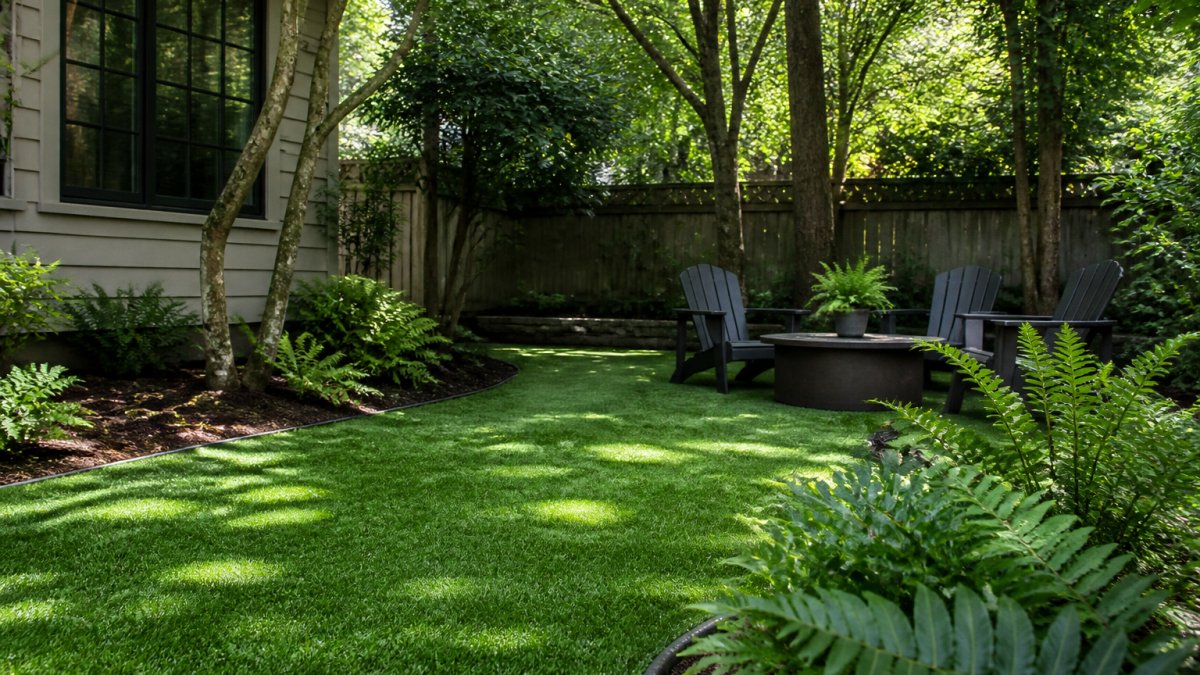
A shaded backyard is a losing battle for natural grass, which is why artificial grass for shady backyards is worth considering.
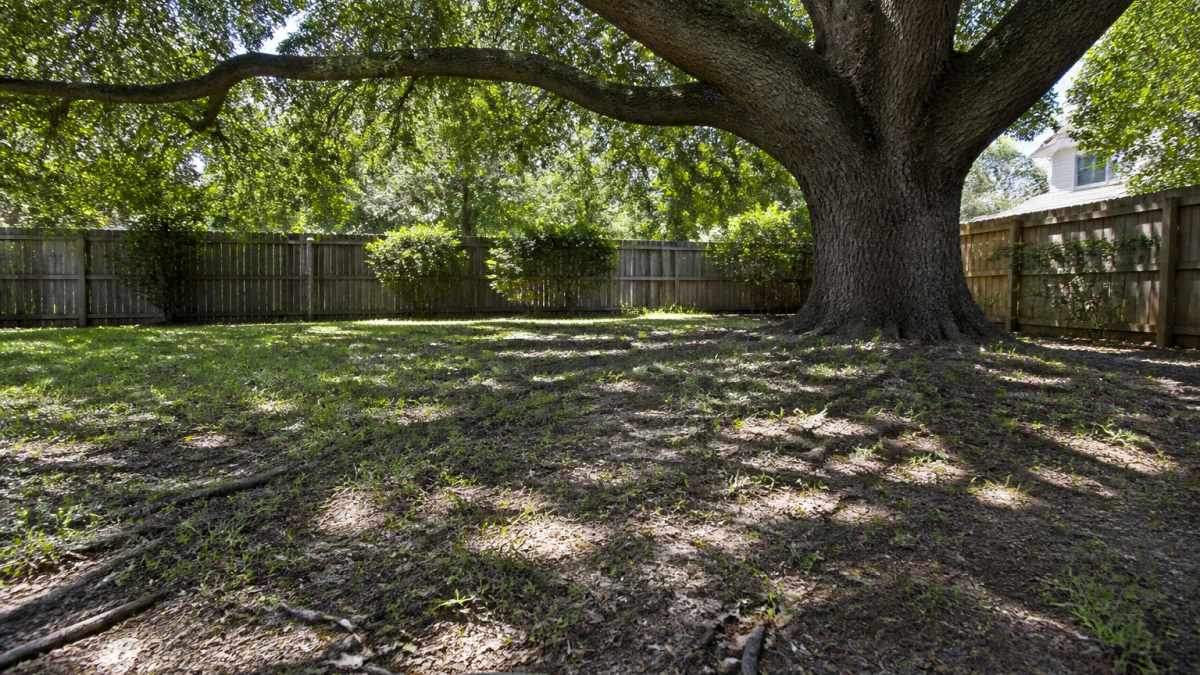
Shade also slows evaporation, so soil under a tree canopy stays damp far longer than an open lawn, weakening roots and inviting moss and fungus.
Common shade mistakes we see in Northeast Florida yards:
- Overseeding with the same sun-loving variety and hoping for a different result
- Cutting the grass shorter to "let more light in," which stresses it further
- Watering more to compensate, which worsens the damp-soil problem
The honest takeaway: if your yard gets fewer than four hours of direct sun, you are not failing at lawn care. You are fighting biology.
How Artificial Grass Performs in Shade
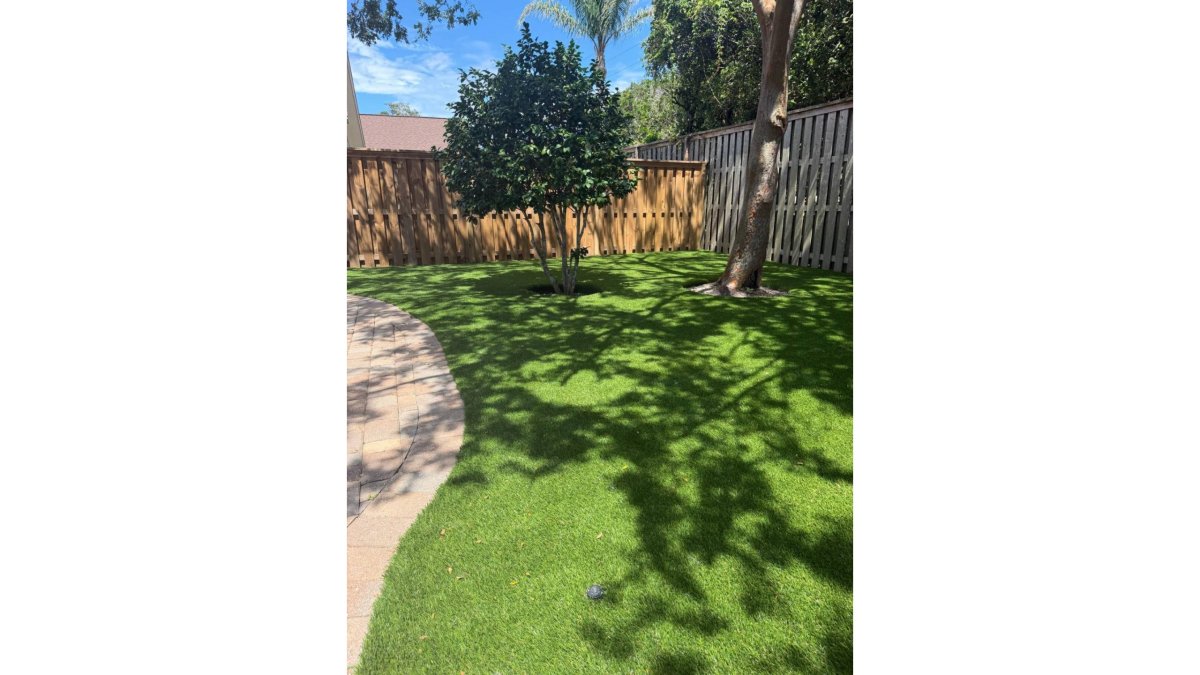
Artificial grass performs well in shade because it does not need sunlight to hold its color or structure, making it a go-to solution for tree-heavy yards.
Shade does change how turf behaves over time: cooler, damper conditions under a canopy affect how quickly the surface dries and how much debris lands on it. Get the base and drainage right, and a shaded installation looks and feels the same as a sunny one.
Partial Shade vs. Deep Shade: What Changes
Partial shade, four to six hours of filtered or direct sun, is the easy case: turf dries normally and needs only routine care. Deep shade, under a dense canopy or against a north-facing wall, is harder. The turf still looks great, but the ground stays damp longer, so drainage and airflow decide whether the installation performs.
Temperature, Airflow, and Tree Canopy Effects
Shade works in turf's favor on temperature: synthetic grass can get hot in full sun, and a tree canopy keeps the surface cooler for kids and pets. The trade-off is airflow, dense foliage traps moisture and blocks wind, so a shaded yard needs a base that drains fast and a surface that can breathe.
Artificial Grass Installation Base for Shaded Yards
The installation base is the single most important factor in how a shaded artificial lawn performs. A properly compacted, well-draining base prevents the two failures that plague shady installs: standing water and uneven settling.
For shaded yards, we build the base with drainage as the priority: excavating deeper, using the right aggregate, and compacting in lifts so the surface stays flat for years.
A Step-by-Step Base Build for a Low-Sun Yard
- Mark and strip the area. Remove existing sod, roots, and organic topsoil. Organic matter left under the base is the number-one cause of settling and odor in shaded installs.
- Excavate to depth. For a typical 1.5-inch pile with infill, plan on roughly 3 to 4 inches of total excavation: about 2 to 3 inches of compacted base plus the turf and infill. Add an extra inch in deep-shade yards for more drainage capacity.
- Grade for positive drainage. Slope the subgrade so water flows away from the house and any low spots, a common target is about 1 inch per 8 to 10 feet. In yards that slope toward the foundation, correct the grade before anything else goes down.
- Lay and compact the aggregate in lifts. Use a crushed, angular aggregate, 3/4-inch minus crushed stone is standard, and compact it in 2-inch lifts with a plate compactor. Thin lifts give you a firm, uniform surface instead of a soft middle.
- Add a weed barrier. In a low-light zone, weeds and volunteer growth still find a way. A commercial-grade, permeable weed barrier blocks growth while letting water pass.
- Check slope and firmness before turf. Walk the base, look for soft spots, and re-check the fall with a level. Fixing the base now costs an afternoon; fixing it later means pulling up the entire surface.
What the Base Costs and How Long It Lasts
Base work is the part homeowners most often underestimate. Excavation, aggregate, compaction, and weed barrier account for a meaningful share of a DIY budget and a smaller share of a professional install, since labor is bundled.
A correctly built base is what lets the turf reach its expected service life. Most quality residential turf carries a manufacturer warranty of 8 to 15 years, and the base is the biggest factor in whether you get there.
Tree Roots, Hard Surfaces, and Airflow
Two site conditions change how you build the base in shade. Tree roots should be graded around, not cut, and a root barrier can keep growth from lifting the base over time.
Airflow matters too. A dense canopy traps still, humid air over the surface, and a fast-draining base plus a permeable backing keeps that moisture from becoming a mildew problem.
Artificial Grass Drainage in Low-Sun Areas
Drainage separates a shaded artificial lawn that lasts from one that turns into a problem. Because shaded ground dries slowly, water has to move through and away from the surface, not sit under it.
We design every shaded install with a perforated backing and a base that channels water off the yard. Good drainage protects the turf, the base, and the air quality around it, which matters most for pet owners.
Signs your shaded turf has a drainage problem:
- Soft, spongy spots that squish when you walk
- A persistent damp or musty smell after rain
- Water pooling at the edges or against a wall
If any of these show up, the fix is almost always in the base, not the turf. That is why we treat drainage as a design decision, not a repair.
Artificial Turf Under Trees: Roots, Debris, and Damage
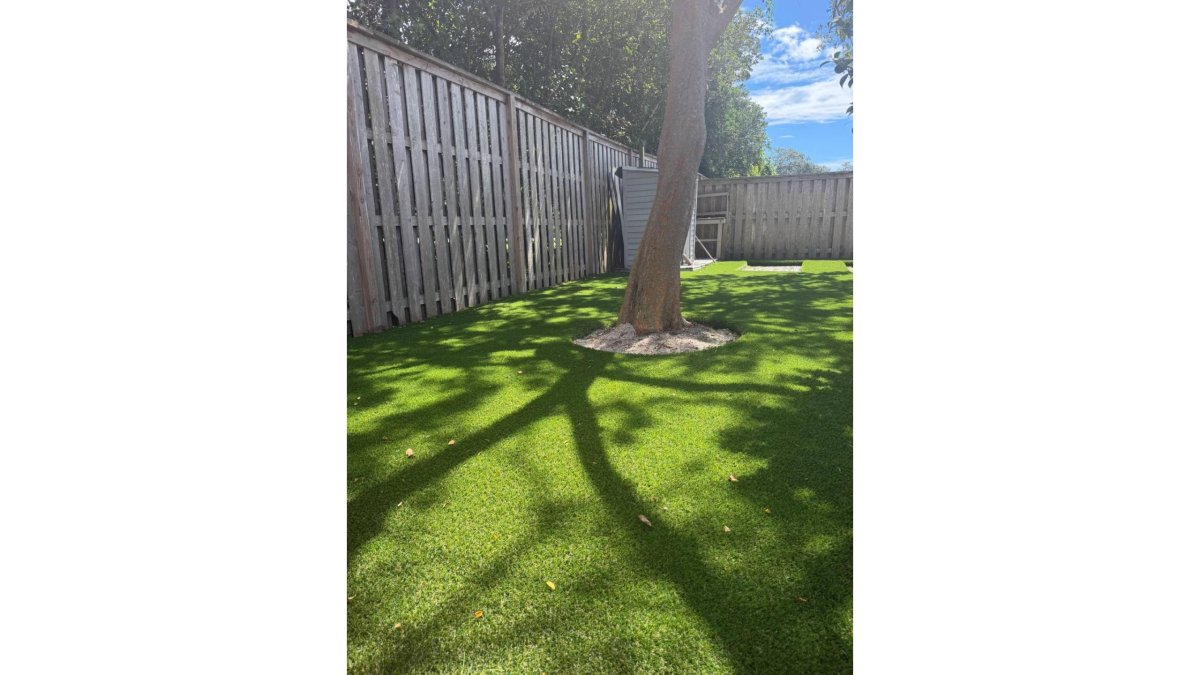
Artificial turf under trees works, but roots and falling debris require planning. Roots can push up a base over time, and leaves, seed pods, and sap land on the surface year-round.
We grade around major roots and, where needed, install a root barrier so growth does not lift the turf. A blower or stiff broom handles most debris; the one thing to watch is sap and heavy organic drop, which can stain or mat fibers if left sitting.
Preventing Artificial Grass Mold and Mildew
Mold and mildew prevention comes down to three things: drainage, airflow, and cleanliness. Mildew needs moisture and still air, so a shaded yard that drains well and stays clear of debris rarely has an issue.
The infill you choose affects how the surface handles moisture. Some infills absorb and hold water; others resist it. In a low-sun yard, choose a non-absorbent infill paired with a base that moves water away fast, together they keep the surface dry enough that mildew never gets a foothold.
A simple shade-specific maintenance routine:
- Rinse and clear debris weekly during heavy leaf-drop season
- Brush the surface to keep fibers upright and air moving
- Spot-clean pet waste promptly with water and a mild cleaner
Choosing the Right Turf for a Shady Backyard
The right turf for a shady backyard has a shorter pile, a dense backing, and a moisture-resistant infill. Shade does not damage synthetic fibers, but it rewards products built for damp, low-airflow conditions. Here are the specifications to compare, because the spec sheet is where a shaded install is won or lost.
Product Specs That Matter in Shade
When you compare options, these specs decide how the lawn performs under a canopy:
| Spec | What to Look For in Shade | Why It Matters |
|---|---|---|
| Pile height | Shorter, around 1 to 1.5 inches | Dries faster, resists matting |
| Backing | Perforated, drainage-rated | Lets water pass through instead of trapping it |
| Infill | Moisture-resistant, non-absorbent | Reduces dampness and mildew risk |
| Fiber shape | Textured, durable blade | Holds up to foot traffic and pets |
| Color | UV-stabilized, fade-resistant | Keeps year-round color |
| Face weight | Higher face weight for the pile height | More fiber per square yard means better durability |
Reading the Spec Sheet Like an Installer
Pile height. In shade, shorter is better.
Backing. The spec most homeowners ignore and the one that matters most in shade.
Infill. A shade-specific decision. In a low-sun yard, choose a non-absorbent infill so the surface does not stay damp after rain.
Color and UV stability. Shade does not fade turf, but UV exposure at the edges of a canopy does.
How Artificial Grass Compares to Shade-Tolerant Natural Grass
Shade-tolerant natural grass varieties exist. Fine-leaf fescue, creeping red fescue, hard fescue, and Chewings fescue tolerate low light better than Kentucky bluegrass, which needs full sun. If you want to keep a natural lawn, a fescue blend is your best shot.
But "tolerates" is not "thrives." Even the best shade-tolerant grass still needs water, mowing, and ongoing care, and it still thins out under deep shade. Synthetic turf removes that whole category of work.
Cost and Long-Term Ownership
Artificial turf is priced by the square foot, and the installed price is higher than the material price because it includes excavation, base, compaction, and labor. DIY lowers the labor line but adds tool rental, hauling, and the risk of a base mistake that shortens the turf's life.
Over the long run, the comparison is not turf versus grass seed, it is turf versus years of watering, mowing, fertilizing, reseeding, and replacing a lawn that never thrived in shade.
Environmental and Safety Trade-Offs
A balanced decision includes the trade-offs. Artificial turf is a plastic product, so end-of-life disposal and recycling options vary by market. Surface temperature can run higher than natural grass in full sun, though shade reduces that concern. For pet owners, hygiene depends on prompt cleanup and a base that drains. Ask your installer what the turf is made of, how it is disposed of at end of life, and whether the materials are free of PFAS, a good installer will answer directly.
Maintenance and Long-Term Ownership in Shade
Shaded artificial grass needs less maintenance than a natural lawn, but it is not zero-maintenance. The routine is simple and, done consistently, keeps the surface looking new for years.
A shade-specific maintenance calendar:
- Weekly: Clear leaves and debris, especially after storms
- Monthly: Rinse the surface and brush fibers upright
- Seasonally: Check drainage, edges, and for any soft spots
Long-term ownership is where artificial turf wins on effort, not just appearance: no mowing, no watering, no reseeding.
If your shaded yard has defeated every lawn you have planted, Bold Turf Co. can help.
Frequently Asked Questions
Can you install artificial grass in a shady backyard?
Yes. Artificial grass does not need sunlight to stay green, so it works in full shade where natural turf fails. The installation still needs a properly compacted base, working drainage, and a turf product built for damp conditions. In shaded yards, the priority shifts from sunlight to water management: standing moisture under the turf is what causes problems, not the lack of sun.
Does artificial grass get moldy in the shade?
Mold and mildew need persistent moisture, not darkness alone. Turf installed over a permeable base with correct slope drains quickly and dries out, which limits growth. Problems show up when water pools because the base was not compacted or the yard slopes toward the house. Regular rinsing and brushing also help. If you notice a musty smell or dark spots, the fix is usually drainage, not the turf itself.
What should you put under artificial grass in a shady yard?
A layered base: compacted crushed stone for stability, a weed barrier to stop growth from below, and a shock pad if the area gets foot traffic or pets. In shade, the crushed stone layer matters most because it moves water away from the surface. Skipping compaction is the most common mistake, and it leads to soft spots, ripples, and poor drainage within the first year.
Does artificial grass drain well under trees?
It can, if the base is built for it. Tree roots, fallen leaves, and compacted soil all slow drainage, so the installation needs a perforated backing and a stone base that channels water away. Roots may also lift the surface over time, which is why root barriers and edge restraints are worth including. Clean debris off the turf regularly so it does not block the drainage path.
A shaded yard should not be a dead zone you give up on. If natural grass has failed you season after season, the problem is the light, not your effort. Bold Turf Co. designs and installs artificial grass built for low-sun conditions, using PFAS-free materials, drainage-first base construction, and hands-on project management from our family-owned team. Get started with Bold Turf Co. and turn that shady corner into a yard you actually use.