 how-to
How to Maintain Backyard Putting Greens
Table of Contents
- Routine Cleaning and Rinsing Your Putting Green
- Removing Debris and Keeping Your Green Clear
- How to Clean Artificial Turf Putting Greens
- Putting Green Turf Brushing and Surface Restoration
- Putting Green Infill Maintenance and Leveling
- Seasonal Putting Green Maintenance Schedule
- Troubleshooting Common Putting Green Problems
- Frequently Asked Questions
Last Updated: October 11, 2026
Routine Cleaning and Rinsing Your Putting Green
The first step in learning how to maintain backyard putting greens is establishing a regular cleaning routine. Your green collects dust, pollen, and organic debris that can affect ball roll and playability. A simple rinse with a garden hose removes surface contaminants without damaging the turf.
Rinse your green weekly during dry weather. Use moderate water pressure, enough to clear debris but not so forceful that it displaces infill material. Rinse in the early morning or late afternoon to avoid water runoff during peak sun hours. This routine keeps the surface clean and helps maintain consistent green speed.
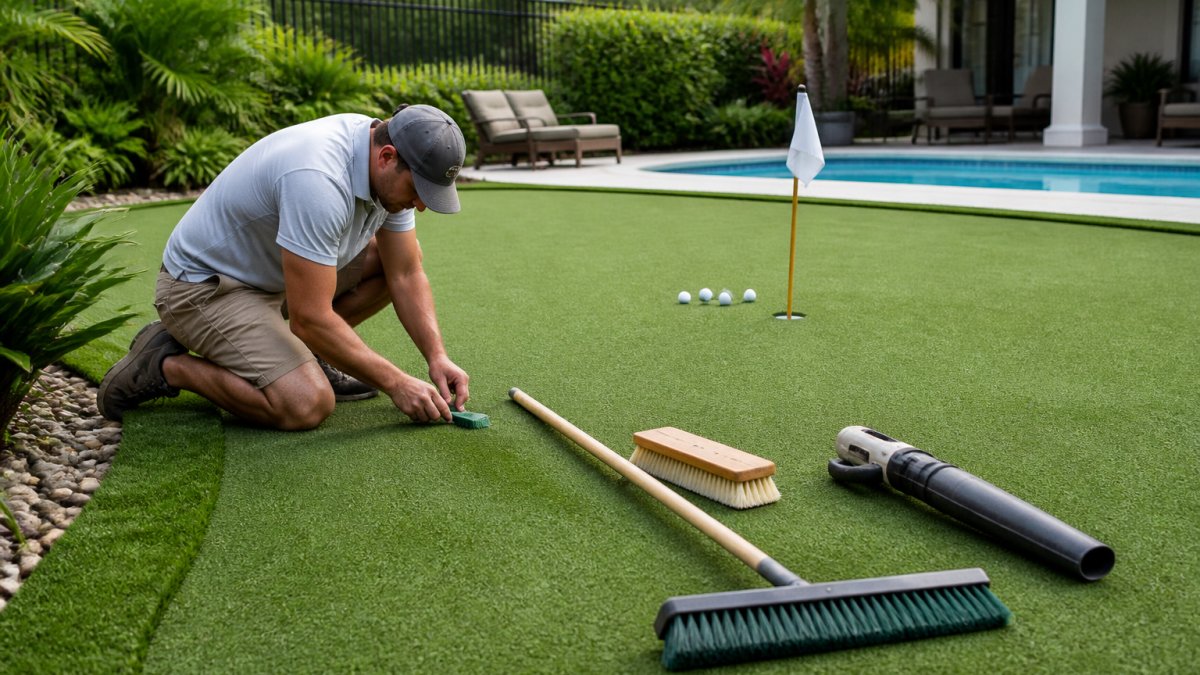
For stubborn stains or algae growth, use a soft-bristled brush with mild soap and water. Scrub gently in circular motions, then rinse thoroughly. Avoid harsh chemicals that can degrade artificial turf fibers. Many homeowners find that this simple weekly maintenance prevents larger cleaning problems later.
Removing Debris and Keeping Your Green Clear
Leaves, twigs, and organic matter accumulate on your green and trap moisture underneath. This debris can promote mold growth and create uneven playing surfaces. Daily removal takes just minutes but makes a significant difference in playability.
Use a leaf blower or broom to clear debris from your green each day. Start at the highest point and work downward, moving debris toward the edges. For leaves stuck in the turf, use a soft rake or your hands to gently pull them free without pulling up infill. Never use a stiff metal rake, it damages turf fibers.
Pet owners should remove waste immediately. Rinse the affected area with water and a mild disinfectant to prevent odor and bacteria buildup. This is especially important if you have dogs or cats that use your green as part of their outdoor space.
How to Clean Artificial Turf Putting Greens
Artificial turf putting greens require different cleaning approaches than natural grass. The synthetic fibers are durable but can be damaged by the wrong cleaning method or products. Understanding safe cleaning practices protects your investment.
Avoid bleach, acetone, and petroleum-based cleaners. These break down synthetic materials and cause permanent discoloration. Instead, use a solution of mild dish soap and water. Mix one tablespoon of dish soap per gallon of water and apply with a soft brush or cloth.
For odor control, especially important if pets use your green, sprinkle baking soda over the affected area and let it sit for a few hours. Then vacuum or sweep it away and rinse with water. This natural approach eliminates odors without chemical damage. Many homeowners report that weekly maintenance with this method prevents odor problems entirely.
Bold Turf Co. recommends testing any new cleaning solution on a small, inconspicuous area first. This ensures the product won't discolor or damage your turf before applying it to the entire green.
Putting Green Turf Brushing and Surface Restoration
Brushing your artificial turf putting green restores fiber texture and maintains consistent ball roll. Over time, foot traffic and use flatten turf fibers, creating worn patches and uneven surfaces. Regular brushing prevents this degradation.
Use a stiff-bristled broom or specialized turf brush. Brush in one direction first, then cross-brush at a 90-degree angle. This cross-brushing technique lifts flattened fibers and redistributes them evenly across the surface. Brush your green weekly, or more frequently if you use it heavily.
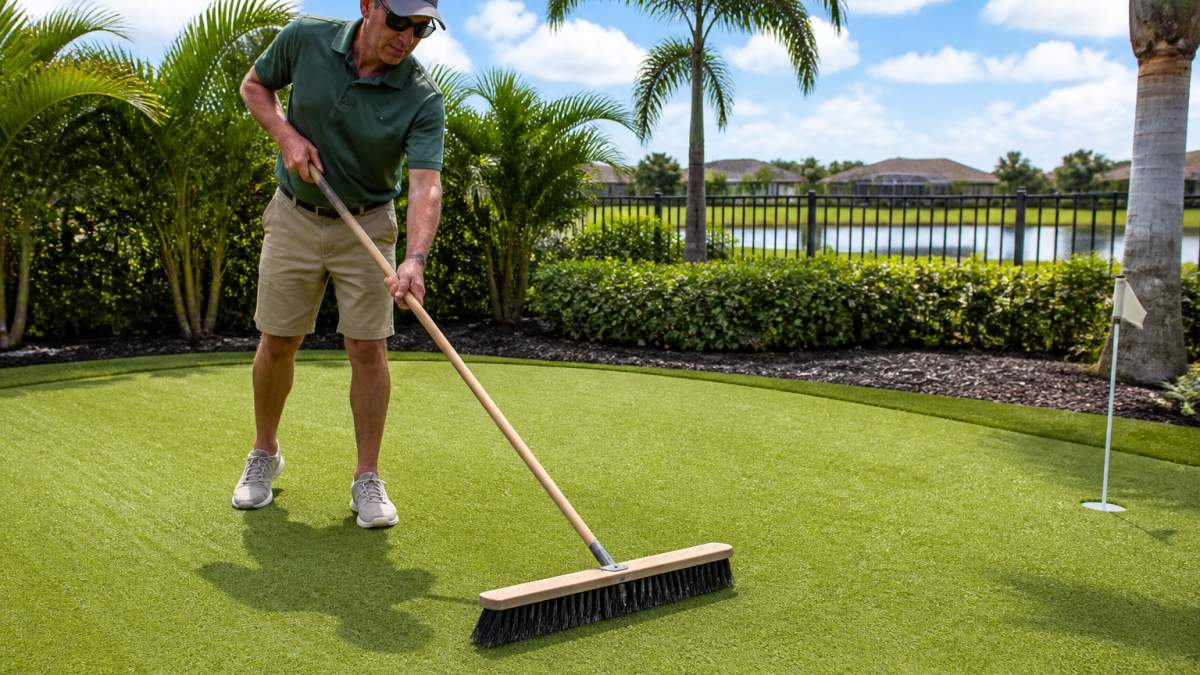
For severely worn areas, brush more aggressively. You can also use a low-RPM drum roller to help restore the surface. A drum roller applies gentle, even pressure that lifts fibers without compacting infill. This equipment is optional but valuable if your green shows significant wear patterns.
Putting Green Infill Maintenance and Leveling
Infill material, typically sand or rubber granules, sits beneath your turf fibers and provides cushioning and drainage. Over time, infill compacts and migrates, creating uneven spots and drainage issues. Regular maintenance keeps infill properly distributed.
Redistribute infill every 2-3 months by brushing and raking. After heavy use or rain, check for low spots where infill has settled. Use a broom to sweep infill from adjacent areas into these low spots. This leveling process takes 20-30 minutes and prevents puddles and uneven ball roll.
A drum roller helps redistribute infill evenly and compacts it to the proper firmness. Roll your green in multiple directions to ensure consistent surface density. Proper infill maintenance directly affects green speed, too loose and the surface becomes unpredictable; too compact and drainage suffers.
Seasonal Putting Green Maintenance Schedule
A structured maintenance calendar helps you maintain backyard putting greens by preventing neglect and adapting your routine to changing conditions throughout the year. Rather than seasonal shifts alone, a frequency-based schedule ensures consistency and catches problems early.
Daily tasks (5-10 minutes):
- Remove leaves, twigs, and organic debris with a leaf blower or soft broom.
- Check for pet waste and rinse affected areas immediately.
- Inspect for visible puddles or drainage issues after rain.
Weekly tasks (15-30 minutes):
- Rinse the entire green with a garden hose at moderate pressure.
- Brush or broom the turf in one direction, then cross-brush at 90 degrees to lift flattened fibers.
- Check infill distribution and rake low spots level.
- Inspect seams, edges, and corners for separation or wrinkles.
Monthly tasks (30-45 minutes):
- Deep clean with mild soap and water; test any new cleaning product on a small area first.
- Redistribute infill across the entire surface using a broom and rake.
- Use a drum roller in multiple directions to compact infill evenly and check surface firmness.
- Measure green speed (see section below) and note any changes.
- Inspect turf fibers for wear patterns or discoloration.
Seasonal adjustments:
Spring: Increase brushing to twice weekly as turf growth accelerates. Check drainage thoroughly after spring rains. This is the ideal window to repair winter damage or worn patches before heavy summer use.
Summer: Rinse twice weekly to manage dust and heat stress. Monitor shaded areas for algae growth. Reduce foot traffic during peak heat if possible, or rinse immediately after use. Pet owners should increase rinse frequency to prevent odor buildup.
Fall: Clear leaves daily as they accumulate. Maintain weekly brushing and infill checks. Temperature swings cause turf expansion and contraction; inspect seams weekly for separation.
Winter: Continue weekly cleaning and brushing, but reduce brushing intensity slightly if turf is dormant or brittle. Monitor drainage after heavy rain or snow melt. Check for mold in damp, shaded areas and increase air circulation if possible.
Troubleshooting Common Putting Green Problems
Even with regular maintenance, problems develop. Knowing how to identify, diagnose, and fix issues prevents small problems from becoming major ones.
Uneven ball roll: This indicates either compacted infill, displaced infill, or flattened turf fibers. Brush the affected area thoroughly and redistribute infill from adjacent areas. If the problem persists, you may need to add infill to low spots. Use a straightedge or level to identify high and low points; a difference of more than 1/8 inch across a 10-foot section will noticeably affect roll.
Drainage issues and standing water: Check that your green has proper slope toward drainage areas (typically 1-2% grade). Remove debris blocking drainage paths. If water still pools after 24 hours, infill may have compacted too much. Aerate the area with a garden fork, working in a grid pattern 6 inches apart and 2-3 inches deep, then redistribute infill and re-level. Ensure your green's perimeter has a swale or drainage channel to direct runoff away from the playing surface.
Seam separation or wrinkles: Temperature fluctuations cause turf to expand and contract. Minor wrinkles (less than 1/4 inch) usually resolve on their own as temperatures stabilize. If seams separate significantly (more than 1/2 inch gap) or wrinkles persist for more than a week, contact a professional installer for repair. Do not attempt to re-glue seams yourself, as improper adhesive application can cause permanent damage.
Odor problems: This typically indicates trapped moisture or bacteria buildup. Increase rinse frequency to twice weekly, improve drainage by checking for low spots, and use baking soda treatments (sprinkle, let sit 2-4 hours, then vacuum and rinse). Ensure pet waste is removed immediately and the area is rinsed with a mild disinfectant. If odor persists despite these steps, the infill may need partial replacement, consult a professional for assessment.
Faded or discolored areas: UV exposure naturally fades turf over time; this is cosmetic and does not affect playability. Discoloration from cleaning products is preventable by using only mild dish soap and water. Avoid bleach, acetone, and petroleum-based cleaners. If discoloration appears suddenly in patches, it may indicate mold or algae; treat with baking soda and increase air circulation and sunlight exposure.
Measuring and tuning green speed:
Green speed is measured using a Stimpmeter, a 36-inch aluminum ramp that releases a ball at a consistent velocity. The distance the ball rolls (in feet) is the green's speed rating. A typical backyard green rolls 8-12 feet; professional greens roll 12-14 feet or faster.
To measure your green:
- Place the Stimpmeter on a level section of your green (avoid slopes).
- Lift the ramp to the marked line and release the ball smoothly.
- Measure the distance the ball travels from the ramp's end.
- Repeat three times and average the results.
If your green is rolling slower than desired, the infill is likely too loose or the turf fibers are too tall. Increase brushing frequency (twice weekly), use a drum roller to compact infill, and ensure infill is evenly distributed. If your green is rolling faster than desired, infill may be too compact or the turf too short. Reduce rolling frequency, add a thin layer of infill to increase cushioning, or brush less aggressively. Most homeowners find that a speed of 10-11 feet provides a good balance of challenge and playability.
Frequently Asked Questions
How often should you maintain a backyard putting green?
Maintenance frequency depends on usage and weather. High-traffic greens need weekly brushing and debris removal. Routine rinsing should happen every 2-4 weeks in dry conditions and after heavy rain. Infill redistribution and deep cleaning typically occur seasonally. A detailed maintenance schedule adjusts based on foot traffic, pet use, and local climate.
What's the best way to clean artificial turf putting greens?
Rinse your green with a garden hose to remove dust and light debris at least monthly. For stains or odors, use mild soap and water or a pet-safe cleaner. Avoid harsh chemicals that can degrade synthetic fibers. After cleaning, allow the turf to air dry completely. For stubborn stains on artificial turf putting greens, spot-treat with a soft brush before rinsing thoroughly.
Can you use a leaf blower on artificial putting green turf?
Yes, leaf blowers work well for removing leaves and light debris from your putting green. Use a low to medium setting to avoid displacing infill sand or damaging turf fibers. A leaf blower is faster and easier than manual raking for seasonal cleanup. After using a blower, inspect the surface to ensure infill remains evenly distributed.
How long does artificial putting green turf last with proper maintenance?
Quality artificial turf for putting greens typically lasts 10-15 years or longer with consistent maintenance. Proper brushing, regular rinsing, timely infill replacement, and prompt weed removal all extend turf lifespan. PFAS-free materials and durable backing support longevity. Neglected greens degrade faster due to compaction, drainage issues, and fiber wear. Your maintenance routine directly impacts how long your green remains playable.
Maintaining a backyard putting green requires consistency but not extensive effort. Weekly cleaning, regular brushing, and seasonal adjustments keep your green playable and looking new. Bold Turf Co. has helped Northeast Florida homeowners install and maintain custom putting greens for over five years. Our PFAS-free artificial turf is designed for durability and low maintenance. Get a free estimate from Bold Turf Co. to learn how a professional-grade putting green can transform your backyard.