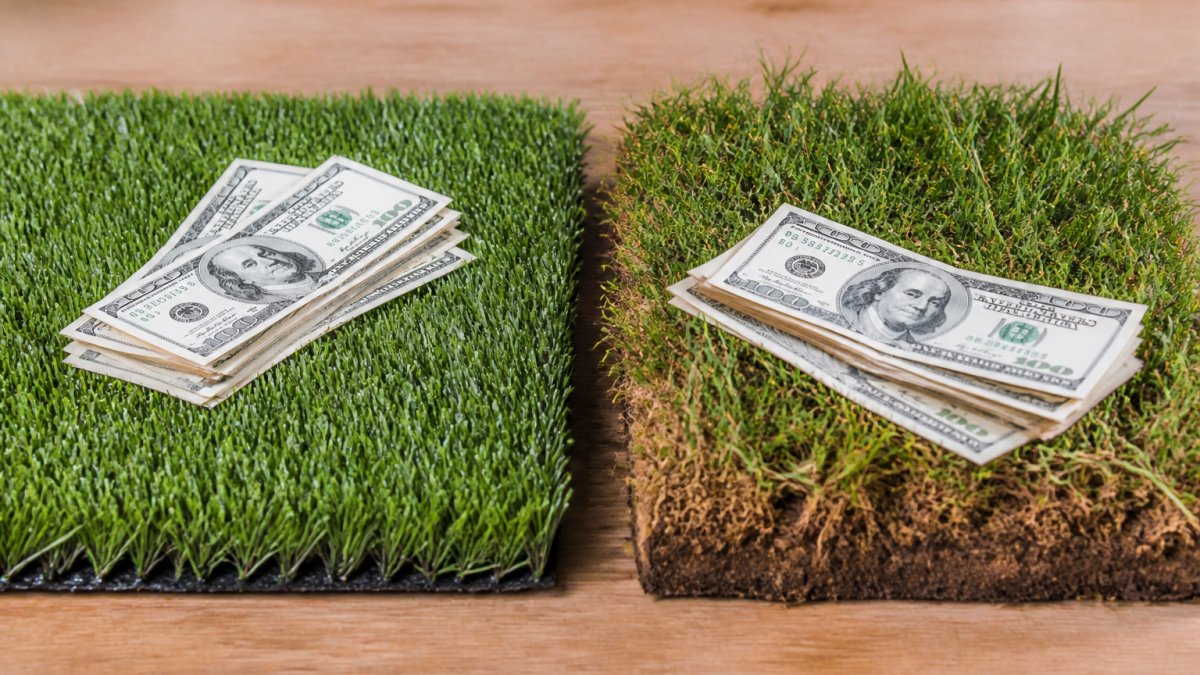
 comparison
Artificial Turf vs Natural Grass Cost 2026: Real Numbers
Table of Contents
- Artificial Turf vs Natural Grass Cost in 2026: The Full Comparison
- Artificial Turf Installation Cost: What Drives the Price
- Sod Installation Cost and Natural Grass Upfront Pricing
- Artificial Grass Maintenance Cost vs Annual Lawn Care
- The 10-Year Cost of Artificial Turf vs Natural Grass
- Artificial Turf Lifespan and Replacement Costs
- Regional and Climate Factors That Change the Math
- Conclusion
- Frequently Asked Questions
Last Updated: October 13, 2026
Artificial Turf vs Natural Grass Cost in 2026: The Full Comparison
The artificial turf vs natural grass cost decision comes down to one question: do you want to pay now or pay every month?
The upfront gap is real. According to California Turf Company's grass versus turf cost comparison, natural grass installation runs $1.75 to $3.00 per square foot, while synthetic turf can reach $20 per square foot.
Artificial Turf Installation Cost: What Drives the Price
Artificial turf installation cost depends on four things: base preparation, yard size, site access, and labor. Materials alone rarely decide the final number.
A typical artificial turf installation cost breaks down like this:
- Materials: turf rolls, infill, weed barrier, edging
- Base prep: crushed stone, grading, compaction
- Labor: excavation, seaming, cutting, finishing
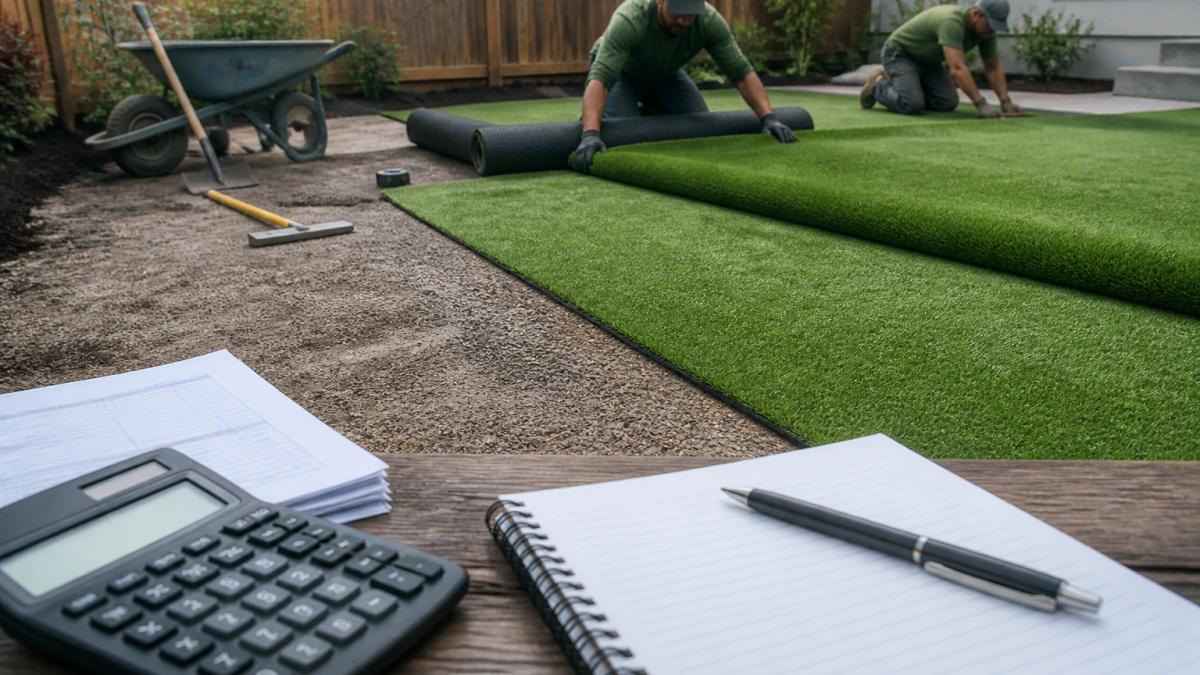
Base Preparation, Grading, and Drainage
Base prep is where budgets quietly grow. A yard that slopes toward the house needs regrading. Clay-heavy soil needs more stone. Poor drainage means water pools under the turf and shortens its life.
Base prep is the foundation of the whole project. Skip it, and the surface ripples within a season.
Yard Size, Site Access, and Labor
Bigger yards lower the cost per square foot but raise the total. Tight gates and steep slopes slow crews down, and labor is billed by time. A wide-open half-acre is cheaper per foot than a cramped courtyard.
Sod Installation Cost and Natural Grass Upfront Pricing
Sod installation cost is the cheapest way to get a green lawn fast. Installed sod typically runs $1 to $3 per square foot, according to Majestic Material's artificial turf versus sod comparison.
But sod is a living thing. It needs water to root, fertilizer to thicken, and patience through its first season. If you seed instead, you trade money for time: lower material cost, slower results, and a lawn that may never fill in evenly.
Artificial Grass Maintenance Cost vs Annual Lawn Care
Artificial grass maintenance cost is low but not zero. Plan on occasional rinsing, brushing, and infill top-ups. Natural grass, by contrast, bills you every single month.
Ergeon estimates artificial-grass annual maintenance at $250 to $350, a fraction of what a living lawn demands once you add water, fuel, and chemicals.
Watering, Irrigation, and the Water Bill
Water is the biggest hidden cost of natural grass. Irrigation systems need installation, repairs, and seasonal adjustments. In hot climates, sprinklers run for months, and every leak shows up on the bill.
Artificial turf needs no irrigation at all. Rain rinses it, and a quick hose-down handles pet areas.
Mowing, Fertilizing, and Repair Costs
Natural grass demands mowing every week or two in growing season, plus fertilizer, weed control, and pest treatment. Repair costs add up too: bare patches, disease, and worn paths from pets and kids.
Turf skips the mower entirely. When damage happens, you replace a small section rather than reseeding the whole lawn.
The 10-Year Cost of Artificial Turf vs Natural Grass
The 10-year cost of artificial turf vs natural grass is where the math flips. Turf front-loads its cost, then runs cheap. Grass starts cheap and climbs every year. But a single headline number hides the assumptions that decide the answer, so here is a transparent model you can rebuild with your own inputs.
An Apples-to-Apples Cost Model You Can Verify
To compare fairly, both surfaces have to use the same lawn size, the same time horizon, and the same list of included costs. Here is the framework. Swap in your own quotes and bills.
Fixed assumptions for this example
- Lawn size: 1,000 square feet of usable lawn
- Time horizon: 10 years
- Included for both: installation, base or soil prep, water, routine maintenance, repairs, and end-of-life
Artificial turf, 10-year model
- Installation: priced per square foot on the installed total, not the turf roll alone
- Base prep: crushed stone, grading, compaction, and drainage
- Infill and edging: included at install, topped up over time
Natural grass, 10-year model
- Installation: sod or seed, plus soil amendment and starter fertilizer
- Irrigation: system install, repairs, and seasonal water
- Routine maintenance: mowing, edging, fertilizing, weed and pest control
How to Find Your Break-Even Point
The break-even point is the year your cumulative savings overtake the upfront premium. Payback period depends on three variables: your water rates, your maintenance habits, and how long you stay in the home.
Run it as a running total, not a single year:
- Write your turf installed total in one column.
- Write your grass installed total in the other.
- Add each year's water, mowing, fertilizer, and repair costs to the grass column.
- Add each year's rinsing, brushing, and repair costs to the turf column.
- Find the year the turf running total drops below the grass running total. That is your break-even.
Yards with high water costs and heavy maintenance break even sooner. Low-water, low-maintenance properties take longer. There is no universal number, only your number.
Sensitivity: What Moves the Break-Even
Small changes in a few inputs swing the answer by years. Test these before you commit:
- Water rate. A high monthly water bill pulls break-even earlier; cheap water pushes it later.
- Lawn size. Larger lawns amplify both the turf upfront premium and the grass water and labor bill.
- Maintenance style. If you mow and fertilize yourself, grass costs less; if you pay a service, it costs more.
Why One Universal Payback Claim Fails
Most comparisons hand you a single payback number as if it applies everywhere. It does not. Labor rates, stone and base material prices, water rates, and turf product prices vary widely by market, so a quote that is accurate in one area can be off by thousands in another. Treat any national average as a starting point, then replace every input with a local figure before you trust the result.
Artificial Turf Lifespan and Replacement Costs
Artificial turf lifespan typically runs 15 to 25 years with proper care. Cheap turf over a bad base can fail in under a decade, which is why material quality and installation matter more than the sticker price. But lifespan is not just a durability fact, it is a cost input, and most comparisons quietly leave the end of life out.
What Actually Determines Turf Lifespan
Lifespan is set by a few interacting factors, not by the calendar:
- Fiber quality and pile height. Thicker, taller fibers resist matting longer than thin, short ones.
- Base and drainage. Poor drainage traps water, softens the base, and shortens life.
- Traffic. Pet areas, play zones, and shaded spots wear first.
A well-built install on a good base tends to reach the upper end of the range. A cheap install on a bad base tends to fail early, and the failure usually shows up as ripples, seams, or a compacted, hard surface.
The End-of-Life Costs Most Guides Skip
When turf reaches the end of its life, the cost does not stop at a new roll. Budget for the full cycle:
- Removal. Crews cut and pull the old turf, which is labor-intensive.
- Disposal. Old turf and infill have to be hauled away, and disposal fees apply.
- Base repair or refresh. The base may need regrading, re-compaction, or new stone.
- New materials and install. A full replacement repeats most of the original installation cost.
This is why a 20-year comparison can understate turf if it assumes one install and no replacement. If your product life is shorter than your time horizon, a replacement cycle belongs in the model.
How Replacement Timing Changes the Comparison
Replacement timing is a sensitivity input, not a footnote:
- If turf lasts longer than your time horizon, you may never pay for replacement inside the window.
- If turf fails early, you may pay for a second install before the grass side has finished its first renovation cycle.
- If you sell the home before replacement, the next owner absorbs that cost, but buyers may discount for aging turf.
Natural grass never needs replacing in the same way, but it does need periodic renovation: aerating, overseeding, and occasionally starting over after disease or drought. Those recurring costs belong in the grass column for a fair comparison.
A Balanced Note on Trade-Offs
Cost is not the only end-of-life question. Old turf and infill have to go somewhere, and disposal options vary by market. Heat retention and surface temperature also differ from living grass, which matters in hot climates. A fair comparison weighs these alongside the dollars rather than treating savings as purely financial.
Regional and Climate Factors That Change the Math
Climate decides which surface wins. In hot, humid regions, natural grass needs more water and mowing, so turf's savings grow.
Rainy seasons test drainage on both surfaces. Winter conditions stress natural grass into dormancy while turf stays green.
Here's what most comparisons miss: regional pricing for labor, stone, and turf varies widely. A quote that's accurate in one market can be off by thousands in another.
| Factor | Artificial Turf | Natural Grass |
|---|---|---|
| Upfront cost | Higher | Lower |
| Water use | None | Ongoing |
| Mowing | None | Weekly in season |
| Lifespan | 15-25 years | Indefinite with care |
| Best for | Low-maintenance, pets, high water costs | Tight budgets, mild climates |
Conclusion
The artificial turf vs natural grass cost question has no single answer, only a trade-off: pay more now and less later, or pay less now and more every month. For busy households, pet owners, and anyone facing high water bills, turf usually wins over the long run. Bold Turf Co. installs PFAS-free artificial turf across Northeast Florida, with 0% financing options and owner-led project management from start to finish.
Frequently Asked Questions
How much does artificial turf cost to install in 2026?
Installed artificial turf generally runs $8 to $15 per square foot in 2026, according to published industry estimates. That range covers materials, base preparation, labor, and infill. A 500-square-foot lawn can land between $6,500 and $9,000. Your actual price depends on yard size, site access, drainage needs, and whether old grass must be removed first. Request a written estimate for your specific property rather than relying on averages.
Is artificial turf cheaper than natural grass over 10 years?
For many homeowners, yes. Natural grass costs less upfront, with sod installation at roughly $1 to $3 per square foot, but you keep paying for water, mowing, fertilizer, and repairs every year. Artificial turf carries a higher upfront cost, yet its annual maintenance runs about $250 to $350. Over a 10-year horizon, the total cost of ownership often favors artificial turf once the break-even point passes, especially in yards with heavy use or expensive irrigation.
How much does it cost to maintain a natural grass lawn each year?
Annual lawn care costs include mowing, watering, fertilizing, weed control, and occasional repairs. Watering alone can add significantly to your bill during dry months, and mowing runs weekly through the growing season. Add aeration, overseeding, and pest treatments, and the yearly total climbs quickly. Many homeowners find that these recurring costs, spread across a decade, approach or exceed the price of installing artificial turf in the first place.
How long does artificial turf last?
Most quality artificial turf lasts 15 to 25 years with basic care. Lifespan depends on foot traffic, sun exposure, pet use, and how well the infill is maintained. Cheaper turf with lower-density fibers can fade or flatten in under 10 years. Choosing a product rated for your climate and use case, and rinsing it regularly, extends its usable life and delays replacement costs.
What factors affect the cost of artificial turf installation?
The biggest cost drivers are yard size, base preparation, drainage requirements, site access, and whether existing grass or hardscape must be removed. Sloped yards, poor drainage, and tight access for equipment raise labor and material costs. Custom features like putting greens or pet-specific infill add to the total. Getting a site assessment ensures your estimate reflects the actual conditions of your property rather than a generic per-square-foot rate.