 how-to
How to Clean Pet Urine From Artificial Turf
Table of Contents
- Why Artificial Turf Retains Pet Odors
- What You'll Need: Tools and Equipment
- Step-by-Step Cleaning Process for Pet Urine
- Best Enzymatic Cleaner for Artificial Turf
- Artificial Turf Maintenance Schedule for Pet Owners
- How to Remove Dog Urine Smell From Turf
- Common Mistakes to Avoid
- Preventative Measures for Pet-Friendly Turf
- Frequently Asked Questions
Last Updated: September 27, 2026
Why Artificial Turf Retains Pet Odors
Understanding how to clean pet urine from artificial turf starts with knowing that pet urine doesn't just sit on the surface of synthetic grass. It soaks through the fibers and settles deep into the infill layer below. This is where the real problem begins.
When your dog or cat urinates on artificial turf, the liquid contains uric acid crystals. These crystals don't break down on their own. They accumulate over time, creating ammonia buildup that gets stronger with each accident. The smell intensifies because urine is trapped in a warm, moist environment where bacteria thrive.
Uric Acid Crystals and Ammonia Buildup
Uric acid is the compound responsible for that pungent pet odor. When urine dries on synthetic fibers, the uric acid crystallizes and bonds to the turf backing. These crystals resist water alone, you need an enzymatic cleaner or acidic solution to break them apart.
Ammonia forms as bacteria break down urine over time. The longer urine sits, the stronger the ammonia smell becomes. This is why spot treatment matters. Addressing accidents within hours prevents the smell from setting in permanently.
The key difference between artificial turf and natural grass: natural soil bacteria naturally decompose urine. Synthetic turf has no such biological system. You must manually intervene.
The Role of Infill in Odor Retention
Most artificial turf systems use infill, typically silica sand or zeolite, to support the grass fibers and provide cushioning. This infill is the primary culprit in odor retention.
Urine flows through the synthetic fibers and settles into the infill layer. The infill acts like a sponge, absorbing and holding moisture. Bacteria colonize this damp environment, multiplying rapidly and producing that persistent ammonia smell.
Zeolite infill actually absorbs odors better than sand, which is why some pet owners prefer sand-based systems. However, both types require regular maintenance. Without proper drainage and periodic deep cleaning, infill becomes saturated with urine and bacteria.
This is why drainage inspection matters. If your turf's sub-base isn't draining properly, urine pools in the infill instead of flowing away. Standing liquid accelerates bacterial growth and locks in odors.
What You'll Need: Tools and Equipment
Before you start cleaning, gather these items:
- Garden sprayer or hose with spray nozzle
- Enzymatic cleaner (pet-specific formula)
- White vinegar (for natural alternative)
- Baking soda (for odor neutralization)
- Soft-bristled brush or broom
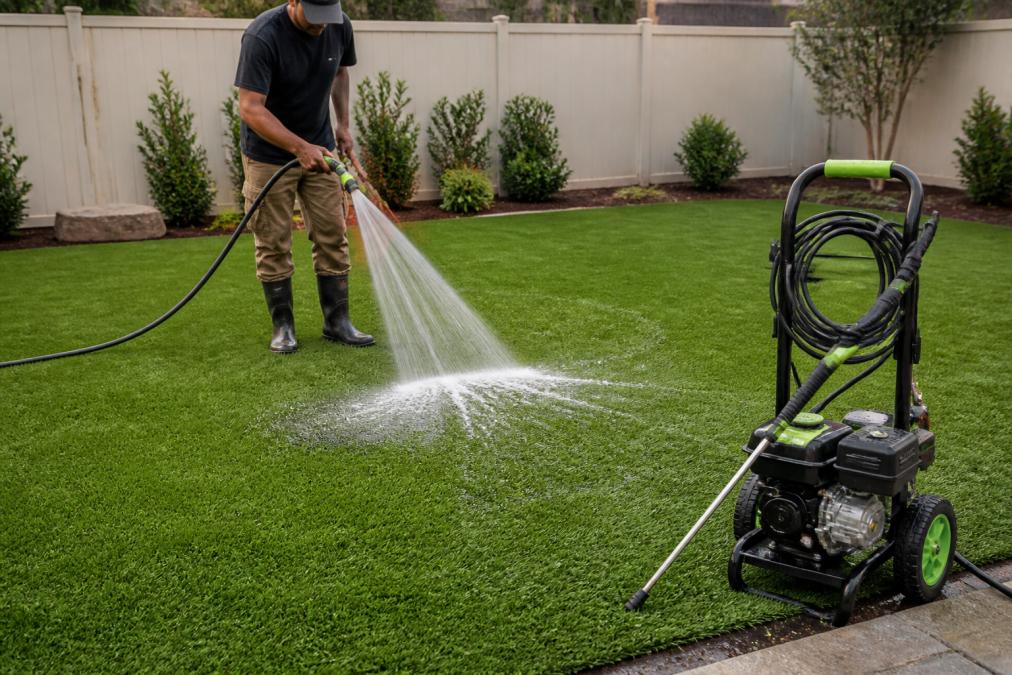
- Pressure washer (optional, for deep cleaning)
- Rubber gloves
- Bucket for mixing solutions
- Absorbent towels or rags
A garden sprayer works better than a hose alone because it delivers liquid evenly across the affected area. A pressure washer is helpful for seasonal deep cleaning but not essential for routine spot treatment.
Step-by-Step Cleaning Process for Pet Urine
Immediate Spot Treatment
Act fast. The sooner you treat fresh urine, the easier it is to prevent odor buildup.
Step 1: Blot the area. If the urine is fresh, use absorbent towels to soak up as much liquid as possible. Don't rub, press the towels down to absorb moisture.
Step 2: Rinse with water. Use your garden sprayer to rinse the spot with clean water. This dilutes any remaining urine and flushes some liquid into the drainage layer.
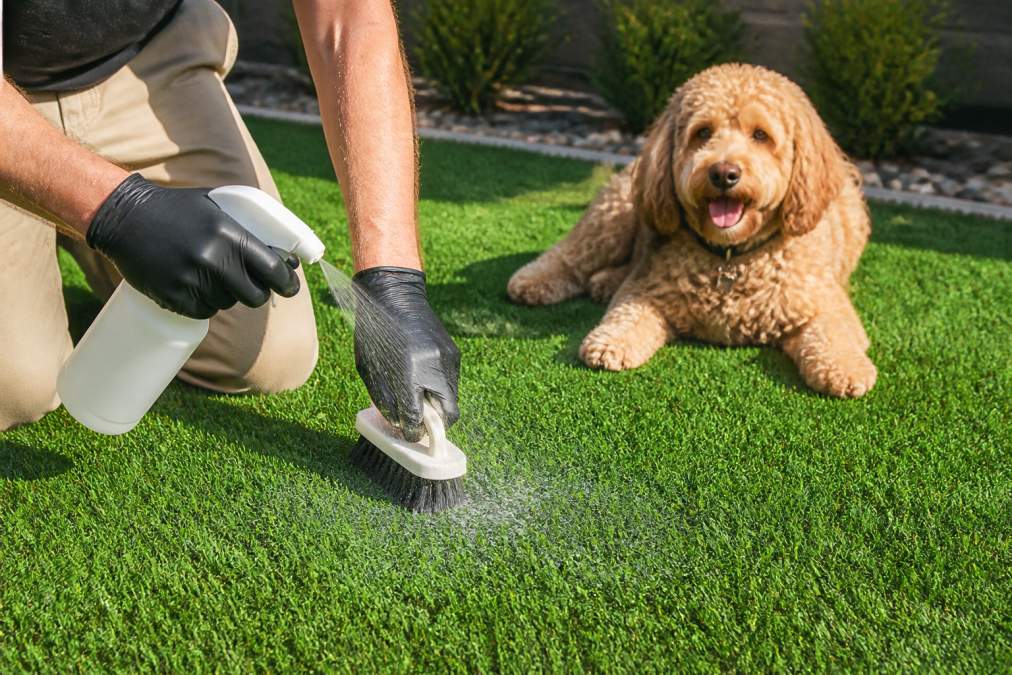
Step 3: Apply enzymatic cleaner. Spray an enzymatic cleaner directly onto the affected area. Let it sit for the time recommended on the product label (usually 10-15 minutes). Enzymatic cleaners break down the organic compounds in urine, eliminating the source of the odor.
Step 4: Scrub gently. Use a soft-bristled brush to work the cleaner into the fibers. Don't scrub aggressively, you can damage the synthetic grass.
Step 5: Rinse thoroughly. Rinse the area again with clean water until all cleaner residue is gone. Leftover cleaner can attract dirt and create a sticky surface.
Deep Cleaning With Enzymatic Solutions
For persistent odors or multiple accidents in the same spot, deep cleaning is necessary.
Step 1: Identify all affected areas. Walk your yard and note spots where your pet frequently urinates. These areas need priority treatment.
Step 2: Prepare the enzymatic solution. Mix the cleaner according to label instructions. Some products require dilution with water; others are ready to use.
Step 3: Saturate the area. Use your garden sprayer to apply the solution generously. The goal is to penetrate the infill layer, not just wet the surface. Let it sit for 20-30 minutes to allow enzymes to work.
Step 4: Agitate the fibers. Use a soft brush to work the solution deeper into the turf. This helps the enzymes reach urine crystals embedded in the infill.
Step 5: Rinse multiple times. Rinse the area thoroughly with clean water. Repeat the rinse cycle 2-3 times to ensure all enzymatic cleaner and dissolved urine are flushed away.
Step 6: Allow to dry. Let the area air dry completely. This usually takes 24-48 hours depending on weather and drainage.
Rinsing and Drainage Inspection
Proper rinsing prevents cleaner residue from attracting dirt and creating new problems.
After rinsing, check your turf's drainage. Pour water onto the treated area and watch where it flows. Water should drain away within seconds. If water pools or drains slowly, your sub-base may have compaction or debris blocking the drainage system.
Slow drainage traps moisture in the infill, creating an ideal environment for odor-causing bacteria. If you notice poor drainage, contact a professional installer like Bold Turf Co. to inspect and repair the sub-base. This is a common issue in areas with heavy clay soil or improper initial installation.
Best Enzymatic Cleaner for Artificial Turf
How Enzymatic Cleaners Break Down Uric Acid
Enzymatic cleaners contain live microorganisms that produce enzymes. These enzymes break the chemical bonds in uric acid and other organic compounds found in pet urine.
When you apply an enzymatic cleaner, the enzymes attack the urine at a molecular level. They don't just mask the smell, they eliminate it by destroying the source. This is why enzymatic cleaners outperform other methods for pet odor removal.
The effectiveness depends on enzyme concentration and contact time. Higher-quality enzymatic cleaners have more active enzymes. Allowing the cleaner to sit longer gives enzymes more time to work. Most pet-specific enzymatic cleaners are designed to work within 10-30 minutes.
Natural Alternatives: White Vinegar and Baking Soda
If you prefer natural solutions, white vinegar and baking soda can help, though they're less effective than enzymatic cleaners.
White vinegar is acidic. It neutralizes ammonia and can reduce odors, but it doesn't break down uric acid crystals. Use it as a secondary treatment after enzymatic cleaning, or for maintenance between deep cleanings.
Baking soda absorbs odors rather than eliminating them.
What to Avoid: Bleach and Harsh Chemicals
Never use bleach on artificial turf. Bleach damages synthetic fibers, causing discoloration and degradation. It also doesn't eliminate urine odors effectively, it just masks them temporarily.
Artificial Turf Maintenance Schedule for Pet Owners
Weekly and Monthly Cleaning Frequency
Establish a routine to prevent odor buildup.
Weekly: Pick up solid waste daily. Rinse the area with water to remove any remaining liquid. This simple step prevents urine from accumulating.
Seasonal Deep Cleaning and Drainage Maintenance
Seasonal changes affect how your turf drains and retains odors.
How to Remove Dog Urine Smell From Turf
Odor Neutralization vs. Surface Sanitation
These are two different approaches, and both matter.
Odor neutralization means removing or masking the smell. Baking soda and activated charcoal neutralize odors by absorbing odorous compounds. These methods work quickly but are temporary.
Infill-Specific Maintenance for Persistent Odors
If odors persist after cleaning, the problem likely lies in the infill layer.
Signs your infill needs attention:
- Persistent odors despite regular cleaning
- Wet or soggy patches that don't drain properly
- Visible algae or mold growth
- Turf feels spongy or soft underfoot
Common Mistakes to Avoid
Using the wrong cleaner. Bleach, ammonia, and harsh chemicals damage turf and don't eliminate odors. Stick to pet-specific enzymatic cleaners or natural alternatives.
Preventative Measures for Pet-Friendly Turf
Prevention is easier than cure.
Designate a potty area. Train your pet to use one specific spot. This concentrates urine in one area, making it easier to manage. Treat this area weekly to prevent buildup.
Frequently Asked Questions
What is the best cleaner for dog urine on artificial grass?
Enzymatic cleaners are the most effective option because they break down uric acid and odorous compounds rather than masking them. These cleaners contain bacteria that digest the organic matter causing the smell. For pet-friendly turf, look for non-toxic enzymatic formulas designed specifically for synthetic grass. White vinegar and baking soda work as natural alternatives, though they're less powerful for severe odors. Always avoid bleach and ammonia-based products, which can damage synthetic fibers and create toxic fumes.
How often should you deep clean artificial turf for pets?
Weekly spot treatment of soiled areas keeps odors manageable, while deep cleaning should happen monthly for households with multiple pets or high-traffic zones. Seasonal deep cleaning (spring and fall) targets odor buildup in the infill and sub-base. The frequency depends on pet size, number of animals, and your turf's drainage system. Properties with poor drainage may need more frequent maintenance to prevent ammonia accumulation in the infill layer.
Will dog pee ruin artificial turf?
Dog urine won't permanently damage quality artificial turf, but neglected odor buildup can degrade the turf backing and infill over time. Uric acid crystals penetrate the synthetic fibers and settle in the infill and sub-base, creating persistent odors if not cleaned regularly. Pet-friendly turf installed with proper drainage and PFAS-free infill resists urine damage far better than lower-quality products. Consistent maintenance, weekly spot treatment and monthly deep cleaning, prevents structural damage and keeps your turf fresh.
Can you use vinegar on artificial turf?
White vinegar is safe for synthetic turf and works as a natural deodorizer by neutralizing ammonia odors. Mix one part white vinegar with three parts water in a garden sprayer and apply to affected areas. However, vinegar is less effective than enzymatic cleaners for breaking down uric acid crystals embedded in the infill. It works best for light odors and routine maintenance rather than severe pet urine buildup. Always rinse thoroughly after application to prevent pH imbalance in the turf.