 How-to
How to Test Artificial Turf for PFAS at Home and in the Lab
Last Updated: November 15, 2026
Quick Summary
To test artificial turf for PFAS, start with a total fluorine screen, then confirm with targeted lab analysis if the result is positive. Collect blades, backing and infill separately, wear clean nitrile gloves, and use an accredited laboratory. Testing shows which compounds are present, not how much exposure a family will get.
- Total fluorine screening is a low-cost first check, but it does not prove PFAS is present.
- Targeted PFAS analysis gives named compounds and concentrations, but only for the compounds on its list.
- Sample blades, backing and infill separately, and collect from representative areas or lots.
- Wear clean nitrile gloves and avoid containers or tools that have held stain-repellent products.
- Ask labs about reporting limits, blanks, duplicates and turnaround before shipping samples.
Table of Contents
- PFAS in Artificial Turf: What Testing Can and Cannot Tell You
- Artificial Turf PFAS Test Methods Compared
- Choosing the Right Test: A Decision Guide
- How to Test Artificial Turf for PFAS at Home: Step-by-Step Sampling
- Reading PFAS Test Results for Synthetic Turf
- Testing Costs, Turnaround Times and Retesting
- Choosing PFAS-Free Artificial Turf and Booking Your Free Turf Estimate
- Frequently Asked Questions
Artificial turf has become a popular choice for Northeast Florida homeowners who want a lawn that stays green without mowing or watering.
PFAS stands for per- and polyfluoroalkyl substances. The term covers thousands of synthetic chemicals that resist heat, water and grease. Some turf makers have used them in fibers, coatings or backings.
PFAS in Artificial Turf: What Testing Can and Cannot Tell You
Testing can tell you whether a sample contains fluorine, and which specific PFAS compounds are present above a set detection level. It cannot tell you how much exposure a child or pet will get from a given lawn. Keep those two questions separate as you read results.
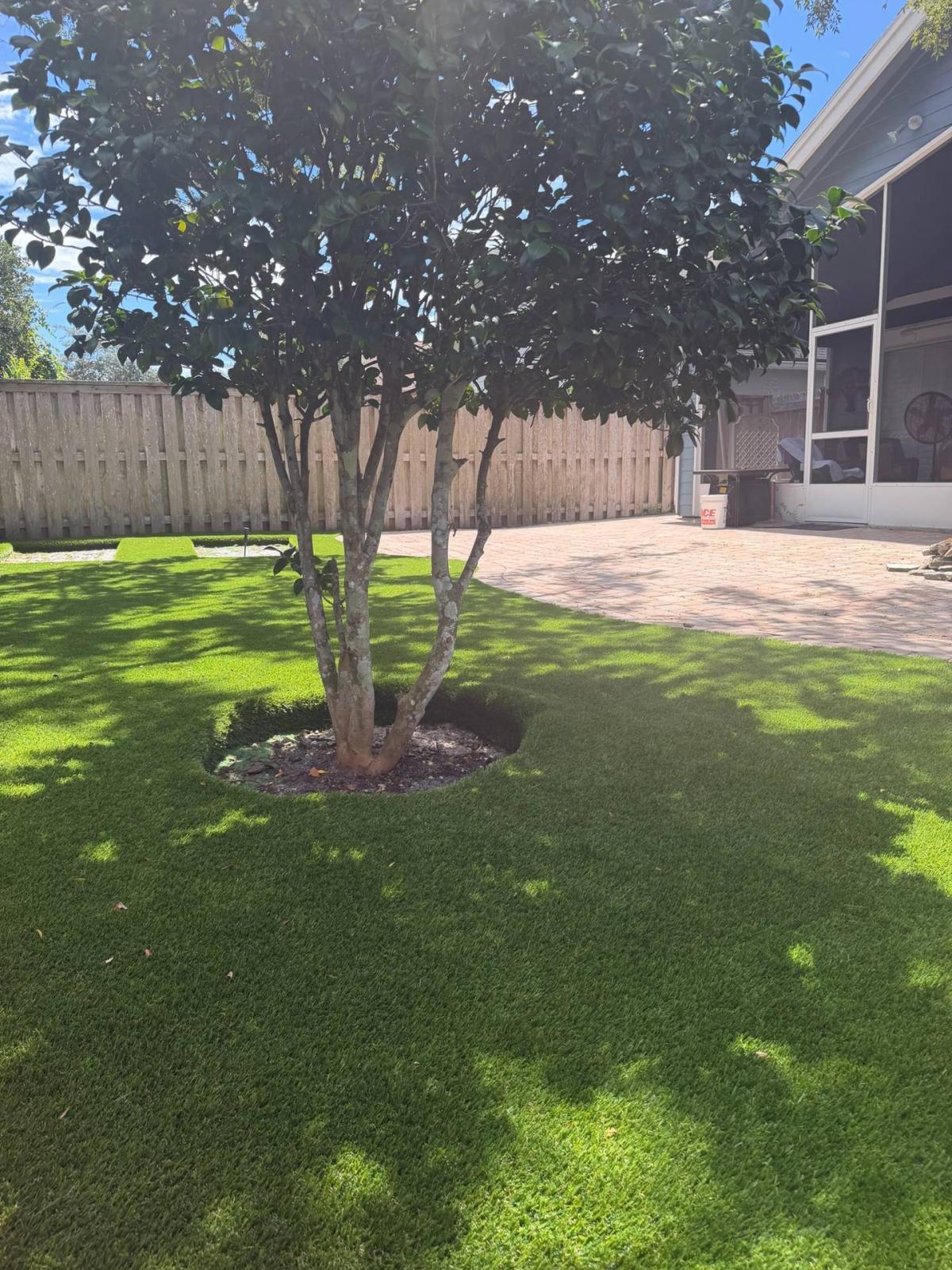
Where PFAS may appear in turf blades, backing and infill
PFAS may show up in the grass blades, the plastic backing that holds the fibers, or the infill granules spread between them. Each part can be made from different materials, so one product may test very differently from another. Ask any installer or manufacturer which components were tested.
Potential exposure routes and health concerns
Exposure can happen by touching the turf, by swallowing small particles from hands or paws, or by breathing dust from worn turf. Health concerns around PFAS are an active area of research, and the science is still developing (Perfluoroalkyl and Polyfluoroalkyl Substances (PFAS)). Talk with a physician if you have specific worries about a family member's health.
Artificial Turf PFAS Test Methods Compared
Several lab methods exist, and they answer different questions. Some are screening tests that detect total fluorine. Others identify specific PFAS compounds. Field test kits are available, but they usually report only a rough indication and should not replace lab work.
| Method | What It Measures | Best Used For | Limitation |
|---|---|---|---|
| Total fluorine screening | All fluorine in the sample | Quick first check | Does not name individual PFAS |
| Total organic fluorine | Organic fluorine compounds | Broader screening | Still not compound-specific |
| Targeted PFAS analysis | Named compounds from a list | Regulatory or detailed reporting | Misses PFAS not on the list |
| Extractable organic fluorine | Fluorine that can be extracted | Deeper screening | Costlier and slower |
Total fluorine and total organic fluorine screening
Total fluorine screening is a common starting point. It measures all fluorine in a sample, including fluorine from non-PFAS sources. A positive result tells you fluorine is present, but it does not prove PFAS is present. Total organic fluorine narrows the focus to carbon-bonded fluorine, which is closer to what PFAS testing needs.
Targeted analysis and extractable organic fluorine
Targeted analysis looks for a defined list of PFAS compounds and reports a concentration for each. It gives the most specific answer, but only for the compounds on the list. Extractable organic fluorine testing pulls organic fluorine from the sample for measurement, which can reveal more than targeted lists capture.
Choosing the Right Test: A Decision Guide
Most people do not need every test. They need the one that answers the question in front of them without paying for information they will not use. Work through the decision points below in order, and stop as soon as you have the answer you need.
Step 1: Name the question you are actually asking
There are only a few reasons to test turf, and each points to a different method:
- "Is there fluorine at all?" You want a fast, low-cost screen. Choose total fluorine.
- "Is the fluorine coming from PFAS or from harmless additives?" You want to separate organic from inorganic fluorine. Choose total organic fluorine or extractable organic fluorine.
- "Which specific compounds are present, and at what concentration?" You want named analytes and numbers you can compare to a benchmark. Choose targeted PFAS analysis.
Step 2: Understand what each method can and cannot prove
Total fluorine screening measures all fluorine in the sample, including fluorine that has nothing to do with PFAS, certain minerals, fillers, and processing aids can register.
A common pattern is to run total fluorine first, follow with total organic fluorine if the screen is positive, and confirm with targeted analysis only when you need compound-level numbers.
Step 3: Match the method to the turf component
Blades, backing, and infill are different materials and may need different preparation. A lab that only grinds and tests blades will miss PFAS that lives in the backing or in crumb infill. Before you choose a method, confirm the lab can prepare and analyze each component you care about, and decide in advance whether you want a single blended result or separate results per component.
Step 4: Set a budget band before you call labs
Test pricing varies by method, analyte count, and turnaround. Screening methods are generally the least expensive per sample; targeted analysis with a long analyte list and fast turnaround is generally the most expensive. Ask each lab for a quote that separates sample preparation, analysis, and reporting, and ask whether there is a minimum number of samples.
Step 5: Decide whether you need one sample or several
One sample answers "does this product contain fluorine?" It does not answer "is my whole lawn uniform?" If the turf was installed in phases, sourced from different lots, or includes multiple infill types, plan for separate samples per area or lot.
Watch out: a screening result is not a substitute for targeted analysis when you need to name compounds or compare against a specific benchmark, treating a total fluorine number as if it identified PFAS is the most common interpretation error.
How to Test Artificial Turf for PFAS at Home: Step-by-Step Sampling
The lab does the analysis, but the sample you send determines whether the result means anything. A clean, representative sample with good documentation is worth more than a more expensive test run on a contaminated or unrepresentative piece of turf. The protocol below is written for homeowners and facility managers who are sending samples to a commercial laboratory.
Step 1: Plan the sample before you cut anything
Decide what question the sample is answering. If you want to know what the product contains, sample the components separately: a piece of blade, a piece of backing, and a scoop of infill. If you want to know what is in the lawn as installed, sample the blended material the way a user would contact it.
Step 2: Select representative areas
Avoid the first spot you see. Walk the area and choose locations that reflect the whole installation, near a heavily used path, in a less-trafficked corner, and, if the turf came from more than one roll or lot, one location per lot. For a residential lawn, two or three locations are usually enough; for a sports field or playground, sample per zone or per lot.
Step 3: Control contamination in the field
PFAS is everywhere in modern consumer products, so field contamination is a real risk. Wear clean nitrile gloves, not latex or vinyl.
Watch out: a single contaminated glove, bag, or tool can produce a false positive that costs you a retest and undermines the report, treat every item that touches the sample as a potential source.
Step 4: Collect each component separately
- Blades: cut a small clump close to the base with clean shears, enough to fill a small sample container.
- Backing: cut a small square of the backing material, including the seam area if you want to check adhesives.
- Infill: scoop material from the top inch or two with a clean tool, avoiding the edges where debris collects.
Place each component in its own lab-supplied container. Do not blend components unless the lab has told you to, and do not add anything to the container.
Step 5: Package, label, and document
Label every container with the date, location, component, and product name. Seal containers in a second bag if the lab provides one. Include a field log that records who took the sample, the weather, the tools used, and any deviations from the protocol. If the result may be used in a dispute or a purchase decision, ask the lab about chain-of-custody forms and follow their instructions exactly.
Step 6: Include quality-control samples
Ask the lab whether they supply field blanks and whether they recommend a duplicate. A field blank, a clean container opened in the field and handled like a sample, tells you whether contamination happened during collection. A duplicate from the same location tells you how much the result varies.
Step 7: Choose and instruct an accredited laboratory
Look for a lab accredited for the specific method you need, and confirm the accreditation covers the matrix, turf, plastic, and crumb rubber are not the same as water or soil. When you call, ask:
- Which method will you run, and what is the full analyte list?
- What is the reporting limit for each compound, and how do you handle non-detects?
- Do you run blanks, duplicates, and matrix spikes, and will those results appear in my report?
Get the answers in writing, and ask for a sample report so you know what the deliverable looks like before you ship. A lab that cannot answer these questions clearly is not the right lab for a defensible result.
Reading PFAS Test Results for Synthetic Turf
Results can look technical, so focus on a few key numbers. Learn what each value means before you decide on next steps.
Units, reporting limits and non-detects
Results are usually reported in parts per billion (ppb) or micrograms per kilogram. A reporting limit is the lowest amount the lab can measure reliably. A "non-detect" means the compound was not found above that limit, which is different from saying it is absent.
Testing Costs, Turnaround Times and Retesting
Costs depend on the test type, the number of compounds, and the lab you choose. Turnaround times vary as well, so ask for an estimate before sending samples. Retesting may be useful after a positive or inconclusive result, or if the product or installation changes.
Choosing PFAS-Free Artificial Turf and Booking Your Free Turf Estimate
If your results raise concerns, or you simply want to start with a product you can trust, choose turf that is PFAS-free from the beginning.
Ask us which materials go into the turf we install and what documentation we can share. Then request your FREE TURF ESTIMATE from Bold Turf Co. to see what a PFAS-free installation would look like for your yard.
Frequently Asked Questions
How can you test artificial turf for PFAS?
Most people test turf by sending a sample to an accredited laboratory. Screening methods such as total fluorine or total organic fluorine indicate whether fluorine is present, while targeted analysis identifies specific PFAS compounds and their concentrations. A useful lab report lists the method used, the reporting limit for each compound and the quality control data. Because results depend on which parts of the turf were sampled, collect blades, backing and infill separately if you need a complete picture. Ask the lab which method fits your goal before you submit.
Can you test artificial turf for PFAS at home?
Home kits that detect PFAS in turf are limited, and most do not provide the compound-level data that laboratory analysis gives. The practical approach is to collect a sample yourself using clean tools and gloves, then send it to an accredited laboratory for testing. Sampling at home is reliable only if you prevent cross-contamination and document where each sample came from. Lab fees and turnaround times vary, so request a quote and timeline before shipping.
How much does PFAS testing for artificial turf cost?
Testing costs depend on the method, the number of samples and whether you need targeted analysis or only screening. Laboratory pricing varies by provider and is not set by Bold Turf Co., so request current quotes directly from accredited laboratories. Factor in shipping, rush fees and the possibility of retesting if results are inconclusive. For current pricing on PFAS-free turf options, contact Bold Turf Co. for a quote.
Can a PFAS test prove that artificial turf is PFAS-free?
A test can show whether PFAS were detected above the reporting limit in the sample tested, but it cannot prove the absence of PFAS across an entire product. Results apply only to the specific material sampled, and a non-detect means no compound was found above that laboratory's reporting limit. For PFAS-free artificial turf, ask suppliers for documentation and independent test reports that name the method and limits used. Bold Turf Co. uses PFAS-free materials, and you can request supporting documentation during your estimate.