 how-to
How to Maintain Pet Turf: 2026 Care Guide
Table of Contents
- How to Clean Pet Urine from Artificial Turf
- Best Enzymatic Cleaners for Artificial Turf
- Managing Pet Odors and Ammonia Buildup
- Artificial Turf Maintenance Schedule for Pet Owners
- Infill Maintenance, Brushing, and Drainage
- Troubleshooting Common Pet Turf Problems
- DIY vs Professional Pet Turf Care
- Frequently Asked Questions
Last Updated: September 25, 2026
How to Clean Pet Urine from Artificial Turf
Pet turf needs a simple routine: scoop waste right away, rinse the spot with water, then treat it with an enzyme cleaner. Skip a step and odor builds fast. This guide from Bold Turf Co. walks through how to maintain pet turf so it stays clean, safe, and odor-free all year.
Urine is the main problem. It carries nitrogen that turns into ammonia gas as it breaks down. That gas is what you smell on a hot day. Left alone, it also feeds bacterial growth deep in the infill.
The good news: pet turf is built to handle messes. You just have to stay ahead of them.
Step 1: Remove Solid Waste Immediately
Pick up solid waste the same day, ideally within minutes. Solid waste breaks down into the turf fibers and clogs the drainage path if it sits.
- Grab waste with a bag or scooper
- Bag it and seal it before it spreads
- Rinse the spot right after
Step 2: Rinse the Area with Water
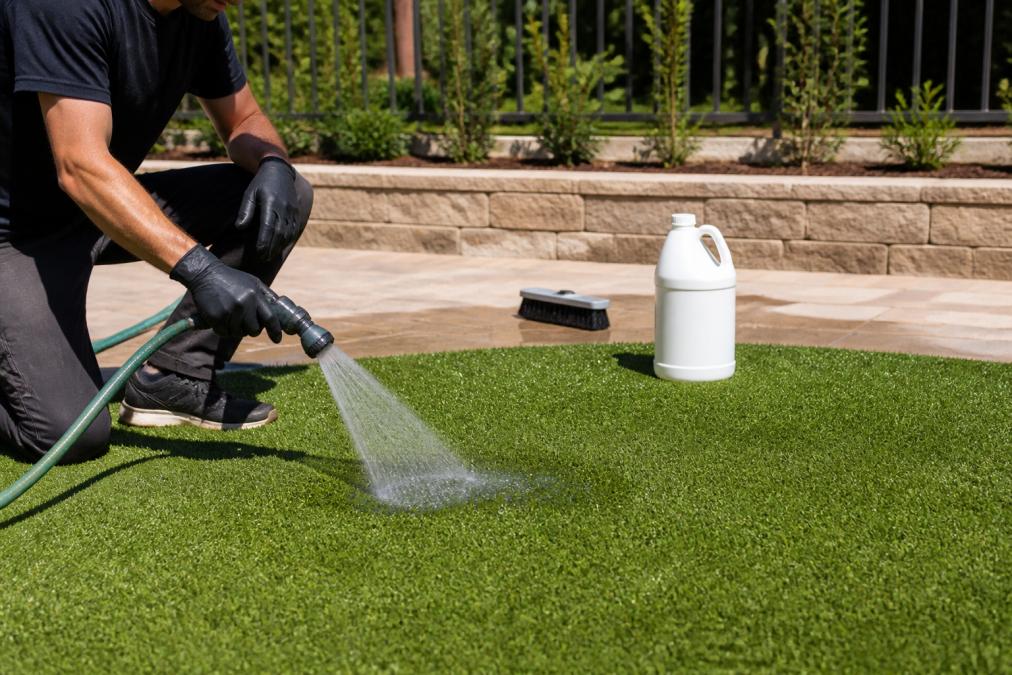
Flush the spot with a garden hose until water runs clear. Rinsing dilutes the urine and pushes it down through the drainage system.
Best Enzymatic Cleaners for Artificial Turf
Enzyme cleaners are the most effective tool for pet urine on artificial turf. They use live enzymes to break down the uric acid crystals that cause odor, rather than just covering the smell.
How to Apply and Let It Work
- Rinse the area with water first
- Spray or pour the enzyme cleaner over the spot
- Let it sit for the time on the label, often 10-30 minutes
- Rinse again with water
- Repeat for stubborn or older stains
Look for a pet-safe, enzyme-based product. Check the label to confirm it's safe for your pets before you use it.
Managing Pet Odors and Ammonia Buildup
Odor control starts with stopping ammonia from forming. Ammonia gas comes from urine breaking down, and it builds up fastest in warm weather and in low spots where water pools.
To manage odors:
- Rinse high-traffic spots more often
- Use enzyme cleaners on any spot that smells
- Sprinkle zeolite infill to help absorb and neutralize odor
- Keep the surface dry so bacteria can't thrive
Artificial Turf Maintenance Schedule for Pet Owners
A steady maintenance schedule is what keeps pet turf in good shape. Break the work into daily, weekly, monthly, and seasonal tasks so nothing gets missed, and adjust the seasonal tasks to your climate, because a turf lawn in a humid summer behaves nothing like one under snow.
| Task | Frequency | Why It Matters |
|---|---|---|
| Pick up solid waste | Daily | Stops bacteria and stains |
| Rinse high-traffic spots | Weekly | Dilutes urine, prevents odor |
| Brush turf fibers | Weekly | Lifts matted blades, spreads infill |
| Deep enzyme clean | Monthly | Breaks down uric acid |
| Full rinse and debris check | Monthly in warm months | Clears drainage, preps for weather |
| Infill top-off and leveling | Twice a year | Restores blade support and drainage |
| Drainage inspection | Before and after heavy season | Prevents pooling and base failure |
Weekly Tasks
- Scoop waste every day, not just on weekends
- Rinse the spots your pet uses most
- Brush the turf to lift flattened blades
- Check for debris like leaves, toys, and mulch that can clog drains
Monthly Tasks
- Apply an enzyme cleaner across high-traffic zones
- Do a full rinse to flush the drainage system
- Refresh infill where it has shifted
- Walk the perimeter and look for seams lifting or edges pulling away
Seasonal Calendar
Most guides treat every month the same. In reality, the work shifts with the weather, and the failure modes shift with it.
Infill Maintenance, Brushing, and Drainage
Infill is the sand-like layer between the turf blades that holds them upright and helps with drainage. Over time, infill shifts, and the turf starts to look flat.
To maintain infill:
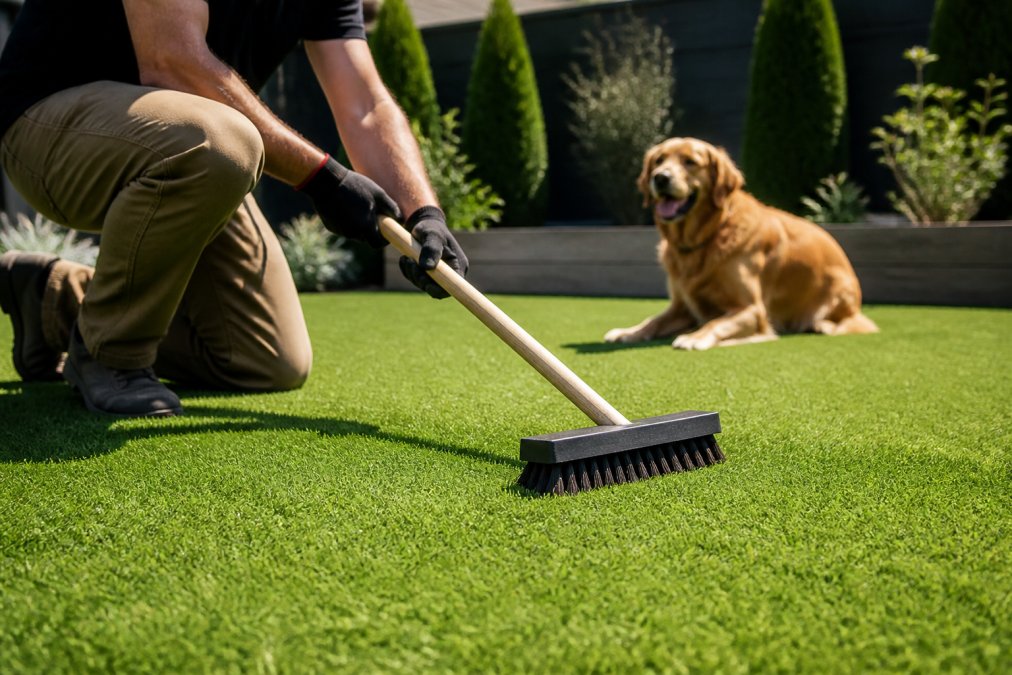
- Brush against the grain to stand the blades up
- Add fresh infill where it has thinned
- Use zeolite infill for extra odor control
Troubleshooting Common Pet Turf Problems
Most pet turf issues trace back to one of a few causes. Here's how to fix the common ones, including the non-urine stains most guides skip entirely.
Persistent Odor
The urine reached the infill or backing, not just the surface. Flush the area deeply with water, apply an enzyme cleaner, let it dwell for the full label time, and rinse again. Repeat for two or three cycles before assuming you need a pro. If the smell returns within a day, the contamination is in the base layer and a professional deep clean or infill replacement is the realistic fix.
Matting or Flattened Blades
Not enough brushing. Groom the fibers weekly with a stiff-bristle or power broom, working against the grain, and refresh infill so the blades have something to stand up in. High-traffic lanes, the path from the door to the yard, the spot under the water bowl, mat first and need the most attention.
Standing Water
A clogged drainage system or a settled base. Clear leaves, mulch, and pet hair from the surface and from any drain grates, then test by running a hose for several minutes. Water should disappear within a few hours. If it pools for a day or more, the base layer has compacted or the drain tile is blocked, and that's a job for an installer.
Stains That Aren't Urine
This is where most guides stop, and it's where pet owners actually get stuck. Urine is the headline problem, but mud, blood, food spills, and pet vomit all leave marks that need different handling.
- Mud: Let it dry completely, then brush it out with a stiff brush before rinsing. Rinsing wet mud pushes it deeper into the infill.
- Blood: Blot, don't scrub. Rinse with cold water first, then treat with an enzyme cleaner or an oxygen-based (not chlorine) cleaner. Hot water sets the stain.
- Food spills and grease: Scrape off solids, then use a mild dish soap diluted in warm water and a soft brush. Rinse thoroughly so no soap residue attracts dirt.
- Pet vomit: Remove solids, rinse, then enzyme-treat the same way you would urine, vomit carries the same organic compounds that feed odor.
- Chewing gum or tree sap: Harden it with an ice cube, pick it off, then spot-clean the residue with a pet-safe cleaner.
- Rust or fertilizer stains: These usually come from metal furniture or lawn products, not the pet. A diluted white vinegar rinse followed by a water flush handles most surface rust; deep rust may need a specialty turf cleaner.
Cleaning Agents: What's Safe Around Pets
Before you reach for a household cleaner, check the label. Bleach, ammonia, and many all-purpose sprays leave residue that can irritate paws and noses, and mixing bleach with an ammonia-based product creates toxic fumes. Stick to enzyme cleaners, oxygen-based cleaners, and mild dish soap diluted in water, and always rinse the area thoroughly and let it dry before your pet returns.
Turf Seams Coming Apart
A seam issue, not a cleaning one. Have an installer check it. Trying to fix a lifted seam with adhesive from a hardware store usually fails within a season.
DIY vs Professional Pet Turf Care
You can handle routine care yourself with a hose, a brush, and an enzyme cleaner. That covers daily scooping, weekly rinsing, and monthly deep cleans.
Professional care makes sense for:
- Deep cleaning when odor won't go away
- Infill replacement across a large area
- Drainage repairs or standing water
- Seam or backing repairs
Frequently Asked Questions
How do I get my turf to stop smelling like dog pee?
The smell comes from ammonia gas trapped in the infill and turf fibers. Remove solid waste right away, then rinse the area thoroughly with a garden hose. Once dry, apply an enzyme cleaner that breaks down uric acid crystals. For persistent odors, consider refreshing the infill with zeolite, which absorbs ammonia. Regular rinsing and monthly enzyme treatments usually keep odors under control.
Can you use Dawn dish soap on artificial turf?
Dawn dish soap can be used for spot cleaning, but it is not a long-term solution. It may leave a sticky residue that attracts dirt and can harm the turf's backing over time. For routine cleaning, stick to water and enzyme-based cleaners designed for synthetic grass. If you do use dish soap, dilute it heavily and rinse thoroughly afterward.
Does dog urine ruin artificial turf?
Dog urine does not ruin artificial turf if you maintain it properly. The main issues are odor from ammonia buildup and potential damage to the backing if waste sits too long. With regular rinsing, enzyme treatments, and proper drainage, your turf can handle pet waste for years. Choosing turf with a high-quality backing and zeolite infill also helps.
How often should you rinse pet turf?
Rinse pet turf at least once a week, and immediately after any solid waste cleanup. In hot weather or with multiple dogs, rinse every few days. A quick rinse with a garden hose dilutes urine and prevents ammonia from concentrating. If you notice a persistent smell, increase rinsing frequency and add a monthly enzyme cleaner application.
Pet turf only stays fresh if you stay on top of it. Daily scooping, weekly rinsing, and monthly enzyme cleaning handle most of the work. When odor or drainage problems go deeper, that's where Bold Turf Co. comes in. Our team installs durable, pet-friendly turf with PFAS-free materials, offers 0% financing options, and manages every project from start to finish. Get started with Bold Turf Co. and keep your yard clean, safe, and odor-free.