 ultimate-guide
Benefits of PFAS Free Artificial Grass: A 2026 Guide
Table of Contents
- Why PFAS Free Artificial Grass Matters in 2026
- What Are PFAS and Why They End Up in Synthetic Turf
- Health Risks of Artificial Grass: What the Research Shows
- How to Choose Safe Artificial Turf: A Buyer's Checklist
- Environmental and Water Conservation Benefits
- Performance, Longevity, and Lifecycle Analysis
- Installation Safety: What Happens on Your Property
- Frequently Asked Questions
Last Updated: October 2, 2026
Why PFAS Free Artificial Grass Matters in 2026
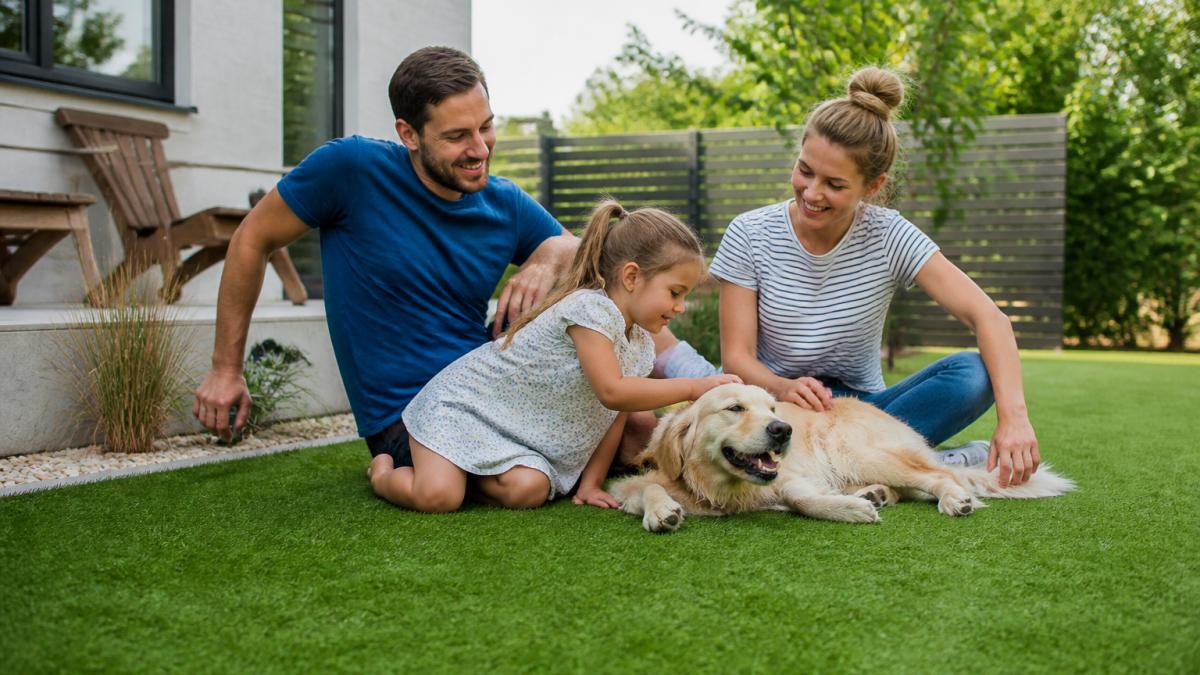
Homeowners across Northeast Florida are asking sharper questions about what's under their feet. PFAS free artificial grass has moved from a niche selling point to a baseline expectation, and for good reason: per- and polyfluoroalkyl substances, the so-called "forever chemicals," have been linked in federal research to health concerns that no family wants to gamble on. This guide from Bold Turf Co. breaks down what the research actually shows, how to verify a product's claims, and where the real trade-offs sit.
Here's the short version: not all synthetic turf is built the same, and the difference comes down to testing you can verify.
If you're shopping for a safe surface for kids, pets, or a commercial property, the label on the box won't tell you enough. Below, we'll show you exactly how to read a lab report, what certifications matter, and which questions separate a genuine PFAS-free product from a marketing claim.
What Are PFAS and Why They End Up in Synthetic Turf
PFAS are a family of thousands of synthetic chemicals defined by their carbon-fluorine bonds, which resist breakdown in the environment and in the human body. They've been used since the 1940s in nonstick coatings, food packaging, and firefighting foam.
In synthetic turf, the concern centers on two places. First, some older or lower-grade backing materials and coatings used fluorinated compounds for stain and water resistance. Second, certain infill and fiber manufacturing processes have historically involved PFAS-adjacent chemistry.
That's the mechanism. What matters for your purchase is simpler: a reputable manufacturer can now produce turf without these compounds, and the only way to know is documentation.
Health Risks of Artificial Grass: What the Research Shows
The honest answer is that risk depends on exposure pathway and product composition, but that answer is only useful if you know which pathways and which endpoints the research actually points to. Federal agencies continue to study PFAS broadly, and the CDC's PFAS and human health overview summarizes the associations researchers have identified across large population studies: elevated cholesterol, changes in liver enzyme levels, reduced antibody response to some vaccines, and developmental effects in some populations.
Chemical Exposure Pathways for Children and Pets
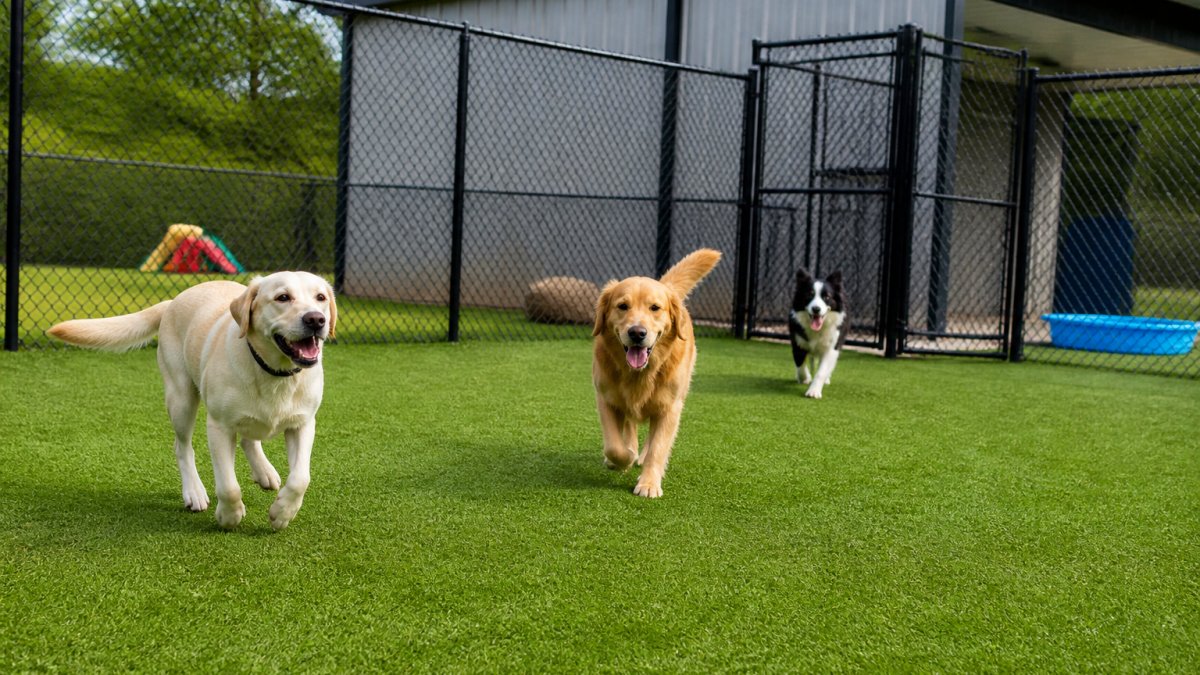
Kids play close to the surface, and pets lick their paws. Those behaviors raise the stakes on chemical exposure. The three routes that matter most on a synthetic lawn are:
- Dermal contact, skin touching fiber, backing, and infill during play, especially on hot days when pores are open and sweat is present.
- Hand-to-mouth and object-to-mouth, the dominant route for toddlers, who touch the surface and then their faces far more often than adults do.
- Inhalation of volatiles and dust, a smaller but real route on hot, high-UV days, when any volatile compounds in coatings or infill are more likely to off-gas, and when crumb rubber or infill dust can become airborne.
Chronic Conditions Linked to PFAS Accumulation
PFAS are called "forever chemicals" because the carbon-fluorine bond that defines them resists breakdown in both the environment and the human body. That persistence is what makes low-level, repeated exposure worth taking seriously even when any single exposure is small. Research has associated long-term PFAS exposure with elevated cholesterol levels and coronary heart disease risk in some studies, alongside effects on fetal development and immune response.
How to Choose Safe Artificial Turf: A Buyer's Checklist
Choosing safe artificial turf comes down to documentation, not marketing language. Ask for third-party lab results, confirm the testing lab is independent of the manufacturer, and check that results are current. Most guides stop there. The problem is that "a lab report" can mean almost anything, a screenshot, an undated PDF, a test on a raw pellet rather than the finished turf.
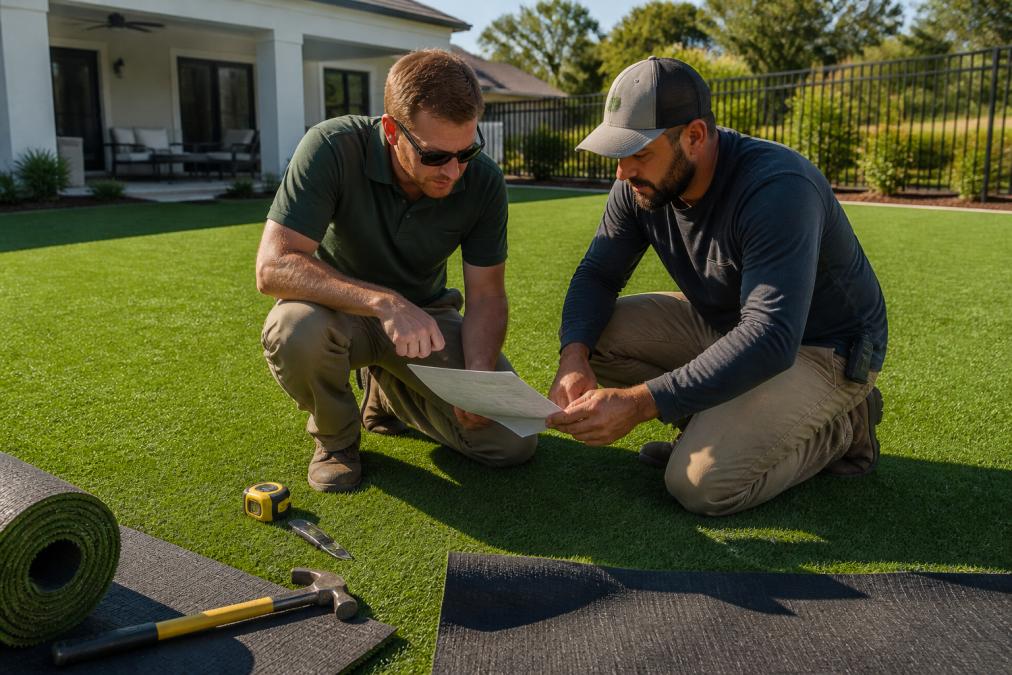
Use this checklist before you sign anything:
- Request a third-party lab report showing PFAS results as non-detectable
- Confirm the report names an accredited, independent laboratory, not the manufacturer's own lab
- Confirm the report is dated within the last 12-24 months and matches the product SKU you are buying
- Confirm the sample tested was finished turf (fiber, backing, and coating), not just raw resin
- Ask for the specific test method and the detection limit reported
- Confirm the turf is lead-free and PAH-free
- Verify UV-resistant and non-flammable ratings
- Ask about infill materials and polymer composition, separately from the turf itself
- Confirm the backing and coating chemistry, not just the fiber
- Check warranty standards in writing
- Ask who performed the test and when
Independent Testing Methodology and Lab-Verified Claims
A lab-verified claim means an accredited, independent laboratory tested the material and reported results. Three details separate a real report from a decorative one:
- The method. For PFAS in environmental and product samples, the U.S. Environmental Protection Agency publishes validated analytical methods, including EPA Method 533, which uses solid-phase extraction and liquid chromatography-tandem mass spectrometry (LC-MS/MS) to detect a defined list of PFAS compounds at very low concentrations. A report that names a recognized method is far more credible than one that just says "tested for PFAS."
- The detection limit. "Non-detectable" only means something relative to a number. A report that detects nothing above 1 part per billion is a weaker claim than one that detects nothing above 1 part per trillion. Ask for the reporting limit and compare it to the method's capability.
- The sample identity. The report should name the product, the SKU or batch, and the date. A test on a generic resin pellet does not tell you what is in the finished roll of turf that arrives at your house.
| Verification Item | What to Ask For | Why It Matters |
|---|---|---|
| PFAS screening | Third-party report naming a recognized method (e.g., EPA Method 533) and a stated detection limit | Confirms no fluorinated compounds above a defined threshold |
| Sample identity | Report tied to the product SKU or batch you are buying | Prevents a clean test on a different material from standing in for yours |
| Lab independence | Accreditation and no financial tie to the manufacturer | Removes the obvious conflict of interest |
| Heavy metals | Lead-free documentation | Protects children and pets |
| PAH content | PAH-free certification | Reduces chemical exposure |
| UV stability | UV-resistant test data | Prevents fading and breakdown |
| Flammability | Non-flammable rating | Safety on hot, dry properties |
Environmental and Water Conservation Benefits
Water conservation is where synthetic grass delivers its clearest, most measurable win. A natural lawn in a hot climate demands constant irrigation, and in Northeast Florida, watering restrictions make that a real constraint during dry stretches.
Performance, Longevity, and Lifecycle Analysis
Longevity is the variable most buyers underestimate. A lifecycle view looks at total cost and material performance over the full service life, not just the install price.
Installation Safety: What Happens on Your Property
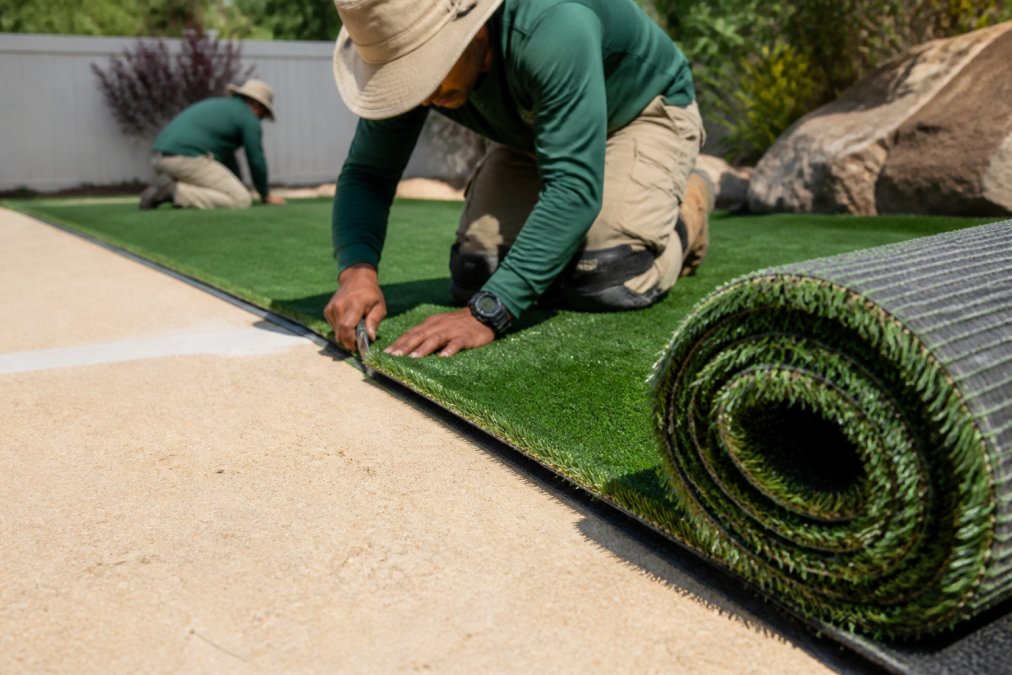
For families in Jacksonville and surrounding counties, this is where a local, accountable installer matters. Bold Turf Co. manages each project from start to finish with PFAS-free materials and direct owner involvement, so you're not chasing a call center when questions come up.
Frequently Asked Questions
What are PFAS and why are they a concern in artificial grass?
PFAS, or per- and polyfluoroalkyl substances, are a group of synthetic chemicals used for stain resistance, water repellency, and durability. They appear in some turf backing, coatings, and infill materials. Because they do not break down easily, they can accumulate in soil and water. The concern with artificial grass is chemical leaching over time, especially in hot climates where surface temperature rises. Choosing PFAS free artificial grass removes that exposure pathway for your household.
How can I verify if my artificial grass is truly PFAS-free?
Ask for third-party lab documentation, not just a marketing label. Look for test reports showing non-detectable levels of PFAS compounds, plus lead-free and PAH-free certification. Reputable suppliers provide product certification tied to a specific batch or product line. If a company cannot produce a test report on request, treat the claim as unverified. Independent testing methodology matters more than a logo on a website.
Does PFAS-free artificial grass perform differently than standard turf?
No meaningful performance gap exists when the product is well made. PFAS-free turf still uses UV-resistant fibers, non-flammable backing, and durable polymer composition. What changes is the chemical additive package, not the blade strength or colorfastness. Many homeowners report the same lifespan and appearance as conventional turf. The real difference shows up in maintenance requirements and warranty standards, which vary by manufacturer rather than by PFAS status.
Is PFAS-free turf more expensive than traditional options?
Pricing depends on product line, square footage, site conditions, and installation scope. Request a written estimate that separates material cost from installation so you can compare fairly. Financing options can spread the upfront cost over time.
The challenge with artificial turf isn't finding a product, it's finding one you can actually trust. Bold Turf Co. installs PFAS-free materials backed by documentation, manages every project from start to finish with direct owner involvement, and offers 0% financing options to make the switch manageable. Get started with Bold Turf Co. and get a free turf estimate for a safer, lower-maintenance lawn.