 ultimate-guide
Low-Maintenance Landscaping Ideas: Northeast Florida Guide
Table of Contents
- Why Low-Maintenance Landscaping Matters in Northeast Florida
- Best Low-Maintenance Florida Plants for Your Yard
- Low-Maintenance Front Yard Landscaping Design
- Low-Maintenance Backyard Landscaping Solutions
- Artificial Turf Landscaping Florida as a Maintenance Alternative
- Efficient Irrigation and Water-Wise Design Strategies
- Seasonal Maintenance and Long-Term Expectations
- Frequently Asked Questions
Last Updated: October 18, 2026
Why Low-Maintenance Landscaping Matters in Northeast Florida
Low maintenance landscaping ideas northeast in Florida are essential for homeowners who want beautiful outdoor spaces without constant upkeep.
At Bold Turf Co., we've helped Northeast Florida families shift from high-maintenance natural grass to smarter solutions that thrive in your climate.
Generic landscaping advice doesn't account for what actually works here. This guide breaks down the strategies, plant selections, and design approaches suited to Northeast Florida's conditions.
Best Low-Maintenance Florida Plants for Your Yard
When you choose the right plants, maintenance drops dramatically. Select species that evolved to handle the heat, humidity, sandy soil, and occasional dry spells that define this region.
Native Plants and Drought-Tolerant Options
Native plants are the foundation of any low-maintenance landscaping design in Northeast Florida.
Firebush produces brilliant red-orange flowers from summer through fall with minimal care, tolerates poor soil, handles drought, and attracts pollinators.
Gaillardia (blanket flower) delivers bold red and yellow blooms all season, and bottlebrush offers striking red flowers while handling sandy soil with ease.
Muhly grass and wiregrass provide texture and movement with minimal maintenance. They don't need fertilizer and prefer poor soil; muhly grass produces stunning pink plumes in fall with zero effort.
Groundcovers, Ornamental Grasses, and Slow-Growing Shrubs
Groundcovers eliminate turf and reduce mowing entirely. Asiatic jasmine spreads reliably in sun or shade with occasional trimming, and liriope creates neat borders with purple flower spikes in late summer.
Slow-growing shrubs create structure without constant pruning. Dwarf yaupon holly stays compact, produces red berries, and adapts to various light conditions. Saw palmetto thrives in shade and sandy soil with virtually no maintenance.
Fewer plants reaching mature size means less pruning, shaping, and labor. Work with each plant's natural growth habit instead of fighting it.
Low-Maintenance Front Yard Landscaping Design
Front yards set the tone for curb appeal but shouldn't demand constant attention. Create visual interest through thoughtful plant selection and hardscape elements while minimizing active maintenance.
Plant Spacing and Bed Layout
Proper spacing is where most homeowners make their first mistake. Planting too densely causes crowding, competition, disease, and aggressive pruning as plants mature.
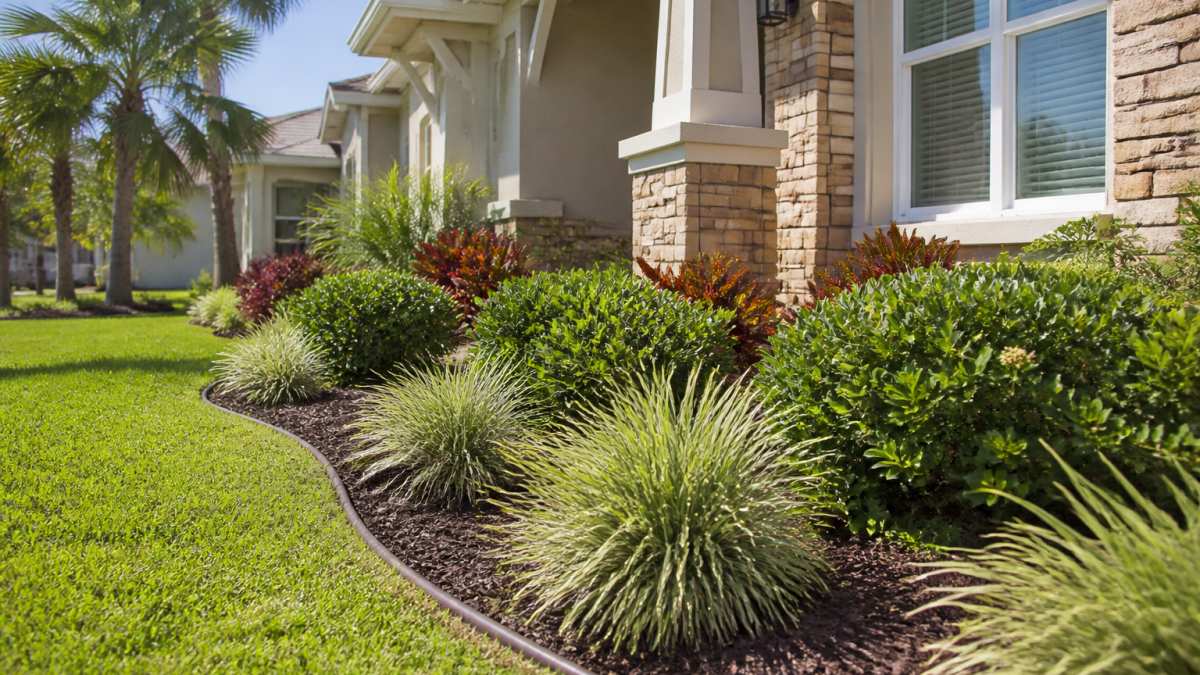
For a low-maintenance front yard, space shrubs 3-5 feet apart depending on mature width, and groundcovers 12-18 inches apart to fill gaps without overcrowding.
Bed layout matters equally. Use clean, defined bed lines with straight edges or gentle curves, avoiding fussy shapes that are hard to maintain.
Mulch and Rock for Defined Bed Lines
Mulch isn't just decorative; it's a maintenance tool. A 2-3 inch layer suppresses weeds, retains soil moisture, and regulates soil temperature, reducing watering and hand-weeding while keeping beds tidy (Mulching woody ornamentals with organic materials).
Rock serves similar functions. Decorative rock provides permanent bed definition, handles heat without degrading, and requires no replacement.
The combination works best: mulch in planting areas where you want soil improvement, rock in accent areas or around specimen plants. This keeps maintenance focused and costs reasonable.
Low-Maintenance Backyard Landscaping Solutions
Backyards are where families actually spend time, so design must balance beauty with usability. Low maintenance landscaping ideas northeast in Florida for backyards focus on reducing lawn area, creating defined zones, and using shade strategically.
Reduced Lawn Areas and Hardscaping
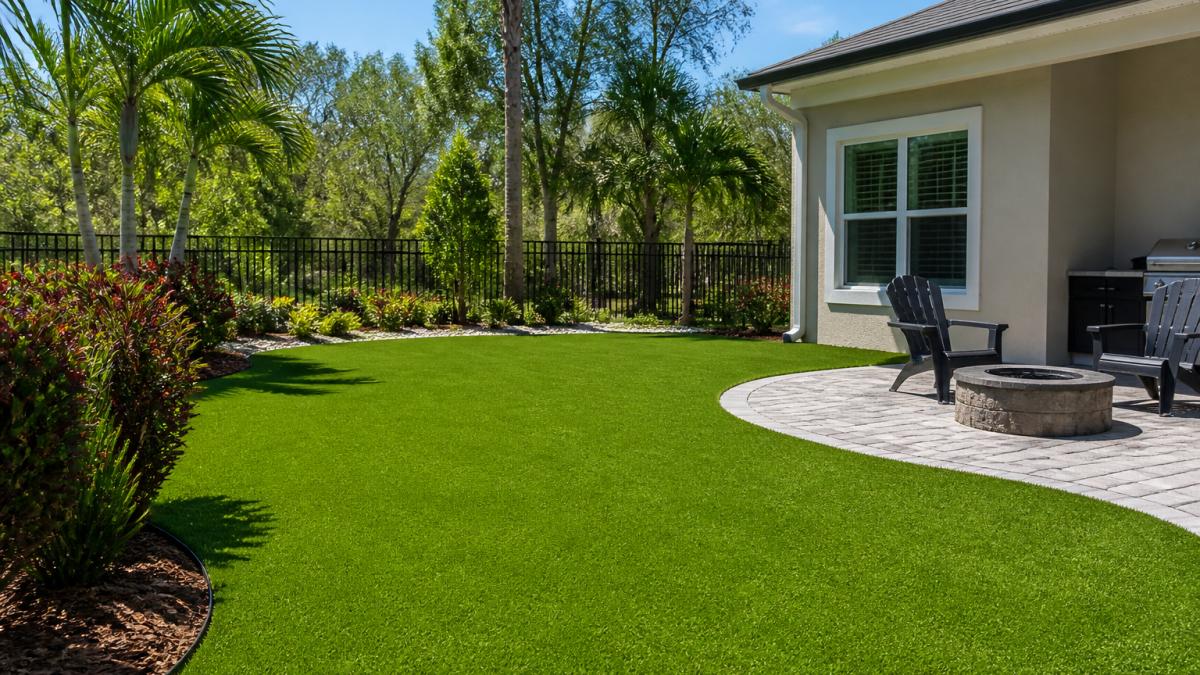
The single most effective way to reduce backyard maintenance is to shrink the lawn. Turf requires weekly mowing, regular watering, fertilizing, and pest management, so replacing even 30-40% with hardscape or planted beds cuts maintenance dramatically.
Hardscaping options include patios, pathways, and defined seating areas that create functional spaces while eliminating mowing.
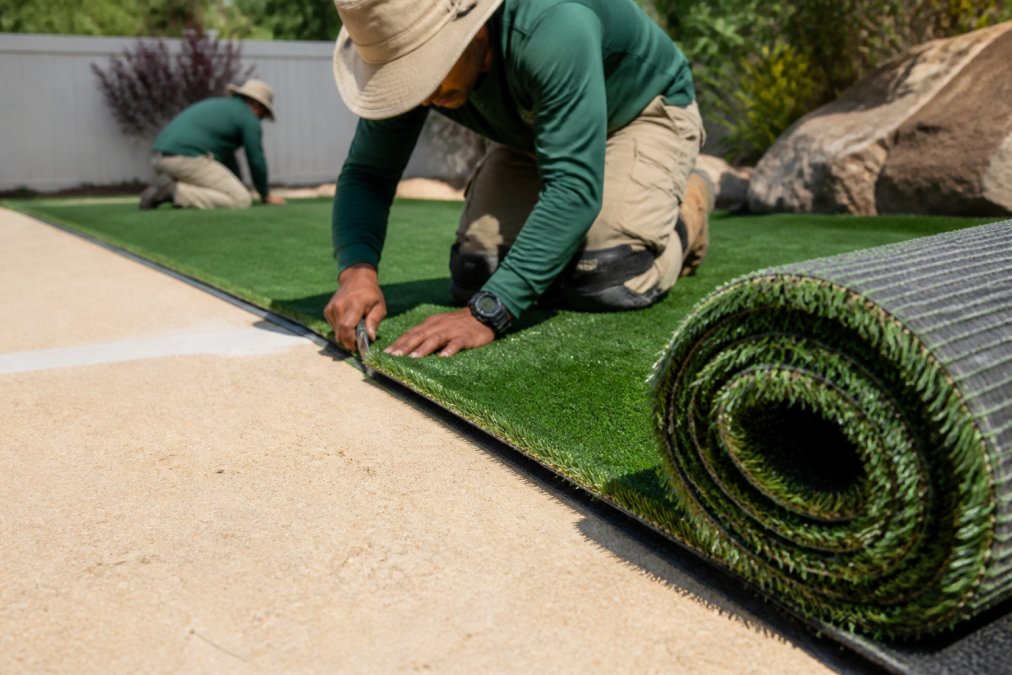
For families with children or pets, artificial turf from Bold Turf Co. offers the appearance of lawn without the maintenance: no mowing, no watering, no fertilizing, just a green, usable surface year-round.
Shade Plants and Site-Specific Planting
Northeast Florida's intense summer sun makes shade a valuable asset. Strategic tree placement and shade plants reduce cooling costs and create comfortable outdoor spaces.
Shaded areas require different plants than sunny spots. Sun-loving species planted in shade suffer stress and disease and demand constant intervention, while shade-tolerant species establish easily and need minimal care.
Site conditions, soil type, drainage, light exposure, should drive plant selection.
Artificial Turf Landscaping Florida as a Maintenance Alternative
Artificial turf represents a fundamentally different approach to yard design. Instead of maintaining natural grass, you're investing in a durable surface that requires virtually no ongoing care.
Natural grass struggles in this region's sandy soil, intense heat, and periodic droughts. Even premium turf needs constant watering in dry periods, frequent mowing in season, and regular fertilizing.
Bold Turf Co. specializes in premium artificial turf installation throughout Northeast Florida. Our PFAS-free materials are safe for pets and children, and our installation process accounts for the region's specific drainage and soil conditions.
The real advantage shows in the cost comparison. Natural grass demands weekly mowing, regular watering, fertilizer, weed control, and periodic reseeding; artificial turf requires none of it.
Efficient Irrigation and Water-Wise Design Strategies
Water efficiency is not optional in Northeast Florida. Sandy soils drain fast, summer thunderstorms deliver too much water too quickly, and salt exposure near the coast stresses plants that are not adapted to it. A low-maintenance landscape still needs water during establishment and during dry spells, so the goal is to deliver the right amount to the right place with as little waste as possible.
Start With a Soil and Drainage Assessment
Before choosing emitters or controllers, check how water moves through your yard. Dig a few test holes 12-18 inches deep and fill them with water. If it drains within an hour, you have the fast-draining sandy soil common across the region and should plan shorter, more frequent cycles. If water stands for hours, that area needs wet-tolerant plants or a raised bed. Group plants by these drainage zones rather than watering the whole yard on one schedule.
Zone by Water Need, Not by Convenience
The most common irrigation mistake is putting drought-tolerant natives on the same zone as thirstier ornamentals. Split the system into at least three zones:
- Establishment zone for new plantings that need consistent moisture for the first year.
- Drought-tolerant zone for established natives and Florida-friendly species that only need water during extended dry periods.
- High-visibility zone for beds near the entry or patio where you want consistent color.
Drip irrigation or micro-spray on separate zones delivers water directly to root zones and avoids overspray onto hardscape, which is especially useful on sandy soil where sprinkler water can run off before it soaks in. Soaker hoses work for small beds and foundation plantings.
Practical Watering Schedules
A common local pattern is watering new plantings two to three times per week for the first month, tapering to once a week by the end of the first growing season. Established native and drought-tolerant plants typically need water only during prolonged dry spells, often every 10-14 days in summer heat if rainfall is scarce. Water early in the morning to reduce evaporation and disease pressure.
Reduce Demand With Mulch and Plant Choice
Mulch is part of the irrigation system. A 2-3 inch layer of pine bark or pine straw slows evaporation, steadies soil temperature, and reduces watering frequency; keep it a few inches from trunks and stems to avoid rot. Pairing mulch with native and Florida-friendly plants adapted to sandy soil and periodic drought is the most reliable way to lower long-term water demand.
Watch for Salt and Runoff
If your property is near the coast or along a tidal creek, salt spray and salt-laden irrigation water can burn sensitive foliage. Choose salt-tolerant species for the first row of plants and avoid overhead irrigation on windy days. Direct downspouts and runoff toward planted beds rather than the street so water soaks in instead of carrying fertilizer and sediment away.
Seasonal Maintenance and Long-Term Expectations
Low-maintenance does not mean no maintenance. It means fewer hours and fewer surprises. The most useful way to plan is a simple seasonal calendar tied to what actually happens in Northeast Florida gardens, plus honest expectations about the first year versus later years.
A Practical Seasonal Calendar
Late winter (January-February). This is the best window for structural pruning of shrubs and small trees before spring growth.
Spring (March-May). Clean up winter debris, cut back ornamental grasses before new growth emerges, and apply a fresh layer of mulch to beds.
Summer (June-September). Maintenance is mostly monitoring.
Fall (October-December). Remove fallen leaves from beds and lawn edges, cut back perennials that have finished for the season, and plant cool-season color if desired.
Realistic Establishment Expectations
The first year is the highest-maintenance period: new plants need regular watering, pest and disease monitoring, and occasional staking. Most native and Florida-friendly species settle in by the second growing season, when watering drops to drought-only and pruning becomes occasional. By year three, a well-designed low-maintenance landscape typically needs only seasonal cleanup, spot weeding, and an annual mulch refresh.
Time and Effort by Task
| Task | Frequency | Typical Time | Best Season |
|---|---|---|---|
| Mulch refresh | Annually | 2-3 hours | Spring |
| Structural pruning | Once yearly, plus as needed | 1-2 hours | Late winter |
| Bed edging | 2-3 times yearly | 1-2 hours | Spring through fall |
| Weeding | Monthly during growing season | 30-45 minutes | Spring through fall |
| Irrigation check | Quarterly | 30 minutes | Any |
| Establishment watering | 2-3 times weekly, tapering | 30 minutes | First year |
What Changes Over Time
As plants mature, spacing closes and weed pressure drops, so weeding and watering decline. The trade-off is occasional renewal pruning on mature shrubs and trees to keep sight lines and walkways clear. Planning for mature size at planting time is the best way to keep later maintenance low.
Frequently Asked Questions
What landscaping is easiest to maintain in Northeast Florida?
Native Florida plants, ornamental grasses, groundcovers, and slow-growing shrubs require minimal pruning and watering once established. Combining these with mulch beds, rock features, and hardscaping eliminates most lawn maintenance. Many homeowners also choose artificial turf landscaping in Florida for zero mowing, watering, or seasonal upkeep while maintaining a year-round green appearance.
What are the best low-maintenance Florida plants for my yard?
Top choices include firebush, gaillardia, beautyberry, bottlebrush, wax myrtle, and native palms. Groundcovers like creeping fig and ornamental grasses such as muhly grass thrive with minimal care. Select plants based on your sun exposure and soil conditions. Drought-tolerant varieties need less watering after establishment, reducing your seasonal maintenance burden significantly.
How can I design a low-maintenance yard without replanting constantly?
Start with proper plant spacing to allow mature growth without crowding. Use mulch or rock in defined landscape beds to suppress weeds and retain soil moisture. Combine slow-growing shrubs with groundcovers and ornamental grasses to create layered texture. Hardscaping elements like pathways and seating areas reduce the lawn footprint, cutting mowing and maintenance time while adding visual interest.
Should I consider artificial turf landscaping in Florida instead of natural plants?
Artificial turf eliminates mowing, watering, and seasonal pruning entirely while staying green year-round. It works in full sun and partial shade, making it ideal for properties with tree coverage. Installation involves upfront costs but saves money on water bills, fertilizer, and maintenance equipment over time. It's especially popular for pet-friendly yards and high-traffic areas where natural grass wears quickly.
What's the difference between mulch and rock for low-maintenance beds?
Mulch retains moisture longer, improves soil health, and breaks down naturally over time, requiring periodic replacement. Rock offers permanent coverage, stays in place, and reflects heat in full-sun areas. Many homeowners combine both: mulch around plants and rock in open bed areas. Both suppress weeds and reduce watering frequency, so your choice depends on aesthetics and long-term maintenance preferences.
How do I maintain a low-maintenance landscape through Northeast Florida's seasons?
Spring requires light pruning and fresh mulch application. Summer focuses on consistent watering during dry spells and monitoring for pests. Fall involves cleanup and preparing perennials for cooler months. Winter maintenance is minimal for most low-care plants. Establishing drought-tolerant plants and efficient irrigation systems reduces seasonal work significantly. Plan planting for early spring or fall when plants establish more easily.