 comparison
Best Salt-Resistant Stone for Florida Patios Compared
Last Updated: November 5, 2026
Quick Summary
The article does not name one definitive best salt-resistant stone for Florida patios; the right choice depends on whether salt is airborne or splashed from a pool. Dense materials like porcelain pavers limit salt penetration, while travertine is porous and needs a coastal-rated penetrating sealer. Always confirm performance data with your installer.
- Plan for salt air if your patio is within sight of the water; plan for splash if it sits beside a saltwater pool.
- Travertine is porous, so it needs a coastal-rated penetrating sealer and a refresh schedule.
- Specify textured, grip-rated porcelain pavers for pool areas, since polished finishes are slippery when wet.
- Light-colored porcelain pavers stay noticeably cooler underfoot than dark ones in direct sun.
- Ask your installer for product-specific salt-resistance test data, especially for shellstone.
Table of Contents
- Why Salt Exposure Is the Hardest Test for a Florida Patio
- How We Compared the Stones: Measured Performance Criteria
- Travertine: Strong Heat Performance, Sealer-Dependent on the Coast
- Porcelain Pavers: Low Porosity and Stain Resistance
- Best Pavers for Saltwater Pools and Heat-Resistant Pool Decks
- Sealed Concrete Pavers, Shellstone and Installation Details That Affect Salt Durability
- Booking Your Patio Stone Estimate With Bold Turf Co.
- Frequently Asked Questions
Why Salt Exposure Is the Hardest Test for a Florida Patio
Choosing the best salt-resistant stone for Florida patios starts with understanding what salt does to stone. Patios closest to the water tend to show wear first. Salt is one of the most common reasons a patio surface loses its color, its texture, or its structural integrity over time.
Salt exposure is not one problem. It comes in several forms, and each one attacks a patio differently. Some patios face constant salt air, while others take direct splash from a saltwater pool. Knowing which one applies to your yard helps you narrow the field before you compare materials.
Salt Air Versus Saltwater Splash
Salt air settles slowly on every surface. Over months, it leaves a fine residue that can dull stone and promote efflorescence, the white crystalline deposit that forms when salts move through porous material. Patios a few hundred yards from the coast often fall into this group.
Saltwater splash is more intense. A saltwater pool deck gets wet repeatedly, and the water evaporates and leaves salt behind on the surface. Many homeowners find that the pool deck, not the front patio, shows the first damage. That is why pool-side materials deserve their own evaluation.
A useful rule: if your patio is within sight of the water, plan for salt air. If it sits beside a saltwater pool, plan for splash and repeated wetting as well.
How We Compared the Stones: Measured Performance Criteria
We compared these materials using a short list of criteria that homeowners can actually check. Our approach focuses on four questions. How porous is the stone? How well does it resist staining and absorption? How does it handle heat? And how much sealing and upkeep does it require to stay in good condition near salt?
Porosity matters because salt moves into open pores. A dense material gives salt less room to penetrate. Heat matters because a patio that holds high surface temperatures is uncomfortable underfoot in a Florida summer. Upkeep matters because even a resistant material can fail if it is never sealed or cleaned.
Keep in mind that published guidance on these materials varies. Where a source does not give a specific measurement, we describe the general characteristic rather than invent a number. Ask any installer for product-specific data before you buy.
Travertine: Strong Heat Performance, Sealer-Dependent on the Coast
Travertine is a natural stone with a cellular structure formed by gas bubbles and mineral deposits in hot springs. Those small voids can interrupt heat transfer, so the surface may stay cooler underfoot than some denser stones.
The trade-off is salt. Travertine is a porous stone, and porosity is what allows salt to penetrate. Salt-laden water can enter the pores, evaporate, and leave crystals behind that may pit the surface over repeated cycles (Conserve O Gram 6/5: Soluble Salts and Deterioration of Archeological Materials).
For coastal properties, travertine is generally paired with a penetrating sealer rather than a film-forming one, since film-forming sealers can trap moisture near salt. Sealer refresh intervals depend on exposure, sun, and cleaning frequency, so ask your installer for a schedule suited to your property.
Travertine is also available in several finishes. Honed or polished surfaces are smoother but can be slick when wet, while tumbled or brushed finishes are more textured and generally offer better slip resistance around a pool.
Pros:
- Strong heat-management performance thanks to its cellular structure
- Natural-stone appearance that many homeowners prefer
- Textured finishes deliver usable slip resistance around pools
Cons:
- Porous; requires a coastal-rated penetrating sealer and a refresh schedule
- Honed and polished finishes become slick when wet
- Product-specific pricing was not available in our research, so ask for a quote
The article's key trade-offs for the main stone options are summarised below.
| Material | Heat performance | Salt-resistance note |
|---|---|---|
| Travertine | Cellular structure helps stay cooler underfoot | Porous; needs coastal-rated penetrating sealer |
| Porcelain pavers | Dense; runs hotter in direct sun | Low porosity; rinse after heavy splash |
| Sealed concrete pavers | Not stated in article | Requires periodic re-sealing |
| Shellstone | Not stated in article | Salt performance unverified; request test data |
Porcelain Pavers: Low Porosity and Stain Resistance
Porcelain pavers are a material option when low porosity is the priority. Porcelain is fired at high temperature until the body vitrifies, which closes most of the open pore space. Porcelain is generally dense and resistant to water absorption, which limits how far salt can travel into the material.
Porcelain is also generally resistant to staining, which can help when splashes and outdoor debris are common. To see how artificial turf holds up to foot traffic as an alternative to hardscape, read Is Artificial Grass Durable Enough for Heavy Foot Traffic?.
Slip resistance is where porcelain needs a closer look. Porcelain pavers are available in a range of surface textures, from polished to a structured, grip-forward finish. A polished porcelain paver around a pool is a genuine slip hazard when wet, and no amount of salt resistance compensates for that. For a saltwater pool deck, specify a textured or grip-rated porcelain paver and confirm the manufacturer's wet slip-resistance rating before you buy. This is the single most important specification decision with porcelain, and it is the one most buyers skip.
Heat behavior is the other trade-off. Porcelain is dense, and dense materials tend to run hotter under direct sun than cellular stones like travertine. Light-colored porcelain pavers stay noticeably cooler than dark ones, so color choice matters as much as material choice on a patio you plan to use barefoot. A common pattern is to pair a light porcelain paver with a textured finish, cool enough to walk on and grippy enough around splash.
Porcelain pavers are generally non-porous and may not require periodic sealing, though a proper base, drainage, and joint material still matter for how water and salt move away from the patio.
Watch out: "Low porosity" and "salt-resistant" are not necessarily the same claim. Salt residue can still collect on the surface and in the joints, so plan to rinse the patio after heavy splash.
Pros:
- Low porosity and good resistance to water absorption
- Stain resistance and consistent color
- No sealing required to maintain salt resistance
Cons:
- Polished finishes are slippery when wet; specify a textured, grip-rated paver for pool areas
- Dense material runs hotter than cellular stone in direct sun
- Salt-resistance performance was not verified in our sources at a specific rating, so confirm with the manufacturer
- No product-specific price was provided
Best Pavers for Saltwater Pools and Heat-Resistant Pool Decks
Pool decks combine the hardest conditions: frequent water, salt residue, and intense sun. The best pool-deck surface needs to stay cool enough to walk on, resist absorbing salt, and hold up to regular cleaning.
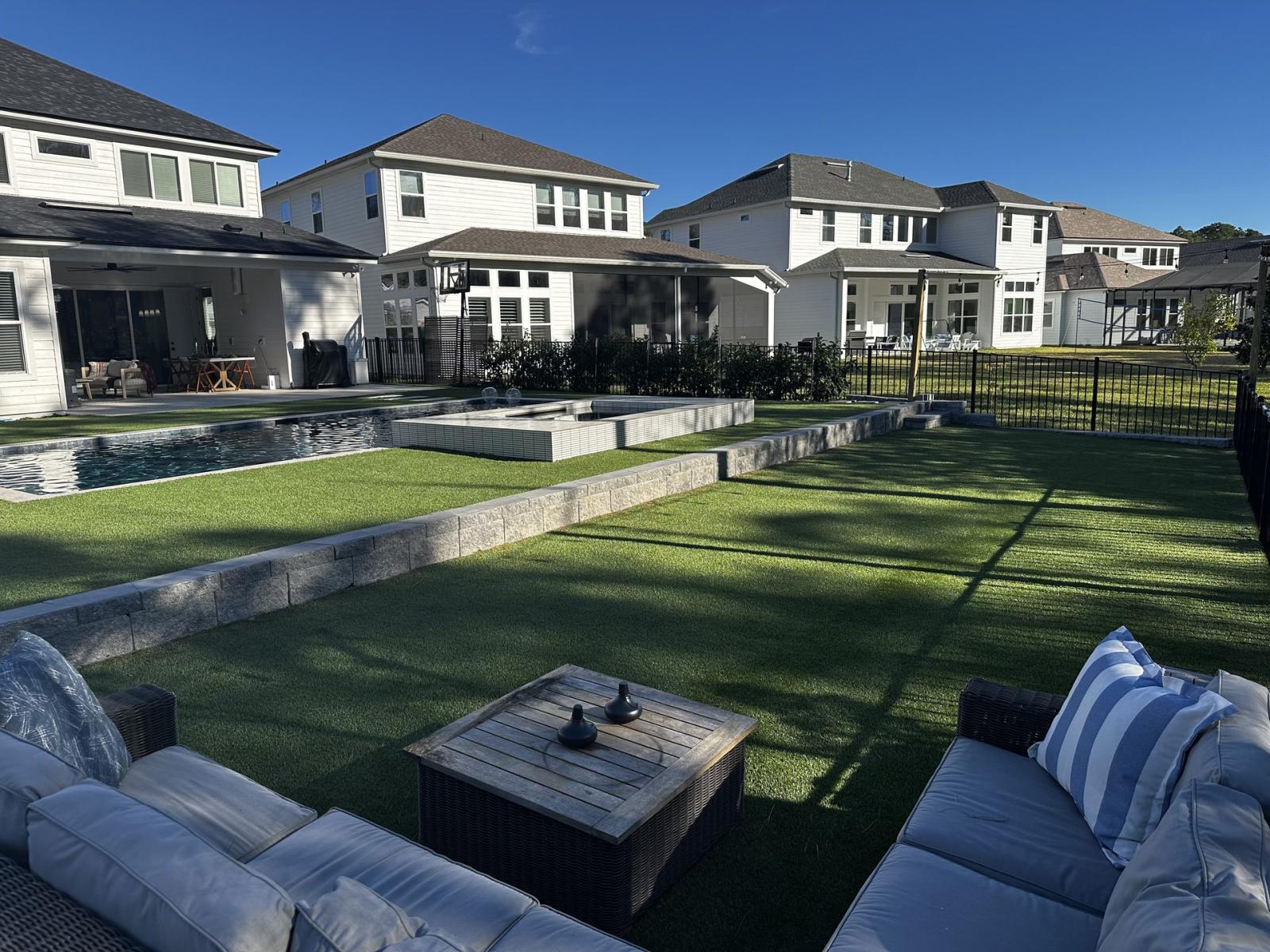
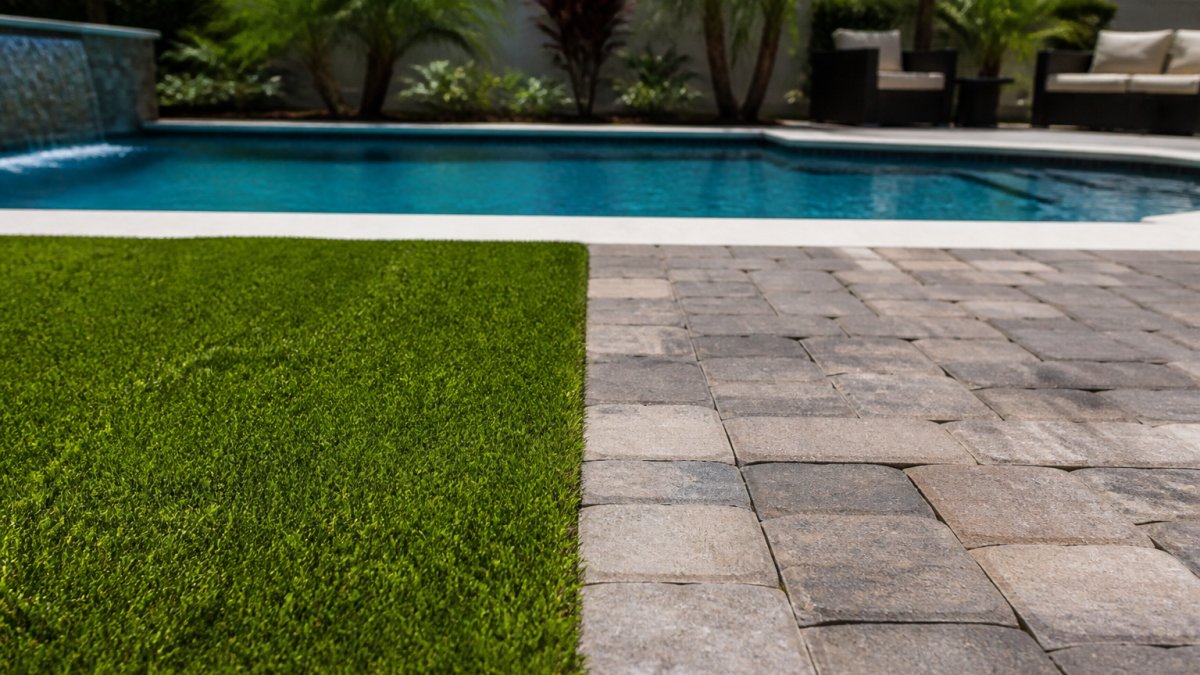
Artificial turf is worth considering for the area around a pool, and it keeps a consistent appearance year-round. A comparison guide on artificial turf versus pavers for pool deck areas walks through the decision in more detail, and you can read it here: artificial turf versus pavers for pool deck areas.
If you want stone at the pool edge, pair a dense paver with a coastal-rated sealer and rinse the surface after heavy splash. Either way, plan for regular upkeep.
Sealed Concrete Pavers, Shellstone and Installation Details That Affect Salt Durability
Sealed concrete pavers can be an option for coastal properties with salt exposure, and sealing is not a one-time task. Ask your installer for a re-sealing schedule.
Shellstone is a material some homeowners consider for pool decks and outdoor living areas. Its salt-resistance performance has not been verified here, so ask your installer for test data before deciding.
Installation details also shape how long any surface lasts near salt. Proper base preparation, drainage, and joint sand all affect how water and salt move through the patio. A well-built patio in a moderate material often outperforms a poorly installed premium one.
Booking Your Patio Stone Estimate With Bold Turf Co.
If you are weighing stone against artificial turf, the right choice depends on your yard, your budget, and how much upkeep you want to take on. Bold Turf Co. offers a free estimate for homeowners in Northeast Florida.
Pricing depends on the materials you choose, the size of the project, and the installation conditions. To request your free estimate, call (904) 575-5803 or visit Bold Turf Co. estimate request. You can also review our installation services and starting pricing before you reach out: artificial turf installation in Jacksonville.
Frequently Asked Questions
What is the most durable stone for an outdoor patio?
Dense stones with low water absorption tend to last longest outdoors. Porcelain pavers rank high on density and resistance to water absorption, and granite is a dense natural stone with similar resilience. Softer, more porous stones such as some limestones and coquina can still perform well, but they need a sealer and regular upkeep to resist staining and surface wear. Durability on a Florida patio depends as much on installation and sealing as on the stone itself, so ask about base preparation and sealer type before you commit.
Are porcelain pavers a good choice for a saltwater pool patio?
Porcelain pavers are a strong candidate for a saltwater pool deck because they are dense, have low porosity, and resist water absorption and staining. Those properties limit how much salt-laden water soaks into the surface. The sources reviewed do not confirm a specific salt-spray rating for porcelain, so ask any installer for documented salt-exposure performance and confirm the grout and setting materials are suited to coastal conditions.
How do you maintain stone pavers exposed to salt?
Rinse salt residue off the surface with fresh water regularly, especially after pool splash or heavy salt spray. Clean with a pH-neutral stone cleaner rather than harsh acids, which can etch limestone and travertine. Reapply a penetrating sealer on the schedule your installer recommends, and choose a coastal-rated sealer where salt exposure is severe. Check joints and sealer condition after each rainy season.
Which patio material is better for hot climates, limestone or bluestone?
For heat, the choice depends on color and surface temperature more than the stone family alone. Lighter-colored stones tend to stay cooler underfoot than dark ones. Travertine's cellular structure can help it stay cooler than some denser stones. Limestone and bluestone both can perform well outdoors, but compare surface temperature on samples in full sun before deciding.
Once you have a clear picture of your patio's salt exposure and your priorities, you are ready to move forward. Reach out to Bold Turf Co. and we will help you choose the material and approach that fits your property.