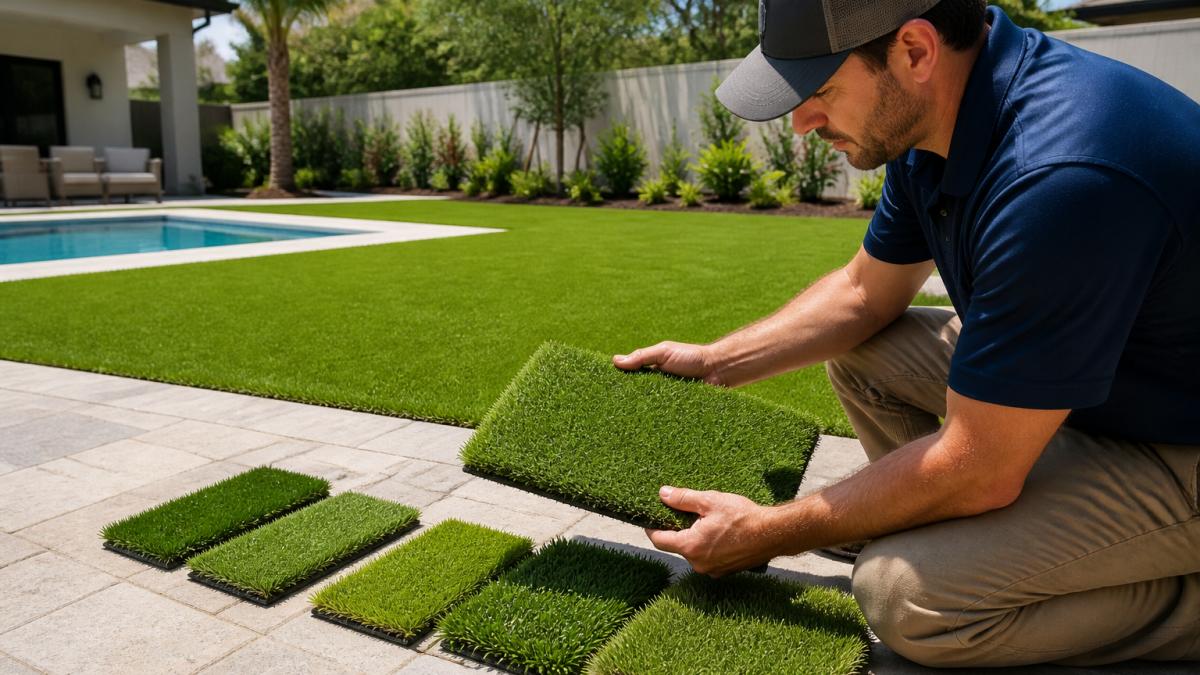
 comparison
XGrass Alternatives for Residential Lawns: 2026 Guide
Table of Contents
- Why Homeowners Look Beyond XGrass
- Best Artificial Grass for Home Lawns: What Sets Alternatives Apart
- Pet-Friendly Artificial Turf: Durability and Odor Control
- Artificial Turf Installation Cost: Budget Breakdown and Long-Term Value
- Installation and Maintenance: Local Expertise vs. National Chains
- Putting Greens and Custom Backyard Applications
- Frequently Asked Questions
Last Updated: October 5, 2026
Why Homeowners Look Beyond XGrass
Homeowners often search for XGrass alternatives residential options because the market has expanded dramatically. What started as a niche product category has become increasingly competitive, with dozens of synthetic turf options now available at different price points and quality levels.
At Bold Turf Co., we've helped hundreds of homeowners navigate this decision. Most come to us after researching multiple options online, comparing specs, and realizing that one brand's marketing doesn't tell the whole story about real-world performance.
The choice between synthetic turf products matters because installation is permanent. You're committing to a product for 10-15 years, and a poor choice costs thousands in removal and replacement.
Best Artificial Grass for Home Lawns: What Sets Alternatives Apart
The best artificial grass for home lawns combines three core elements: realistic fiber appearance, durable construction, and proper installation. Not every synthetic turf product excels at all three, and understanding the differences helps you avoid expensive mistakes.
Bold Turf Co. focuses on products that meet strict durability standards because we stand behind our installations. We recommend evaluating any XGrass alternative for residential lawns based on fiber type, pile height, color blend, UV resistance, and backing material.
The most realistic-looking artificial grass mimics natural grass in color variation and texture. Single-color synthetic turf looks obviously fake because real grass naturally contains multiple shades of green, brown, and tan.
Fiber Type and Pile Height Matter
Polyethylene and polypropylene are the two primary fiber materials used in residential artificial turf. Polyethylene fibers are softer, more durable, and more expensive. They hold color better under UV exposure and resist matting from foot traffic. Polypropylene is firmer and more affordable but degrades faster under intense sun and heavy use.
Pile height, the length of the grass blade, ranges from 1.5 inches to 2.5 inches for residential applications. Taller pile height (2 to 2.5 inches) looks more natural and feels softer underfoot. Shorter pile height (1.5 to 1.75 inches) drains faster and resists matting but sacrifices some of that natural appearance.
Color Blend and UV Resistance
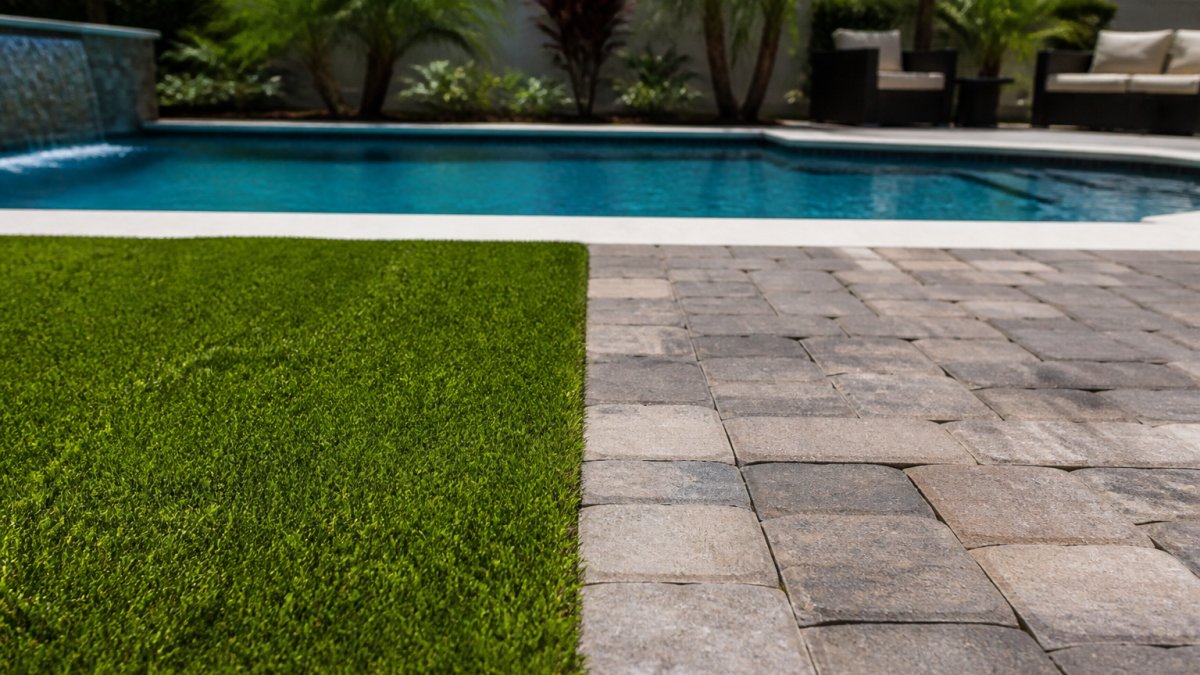
A quality color blend includes light green, dark green, tan, and brown fibers woven together. This variation creates the illusion of a living lawn with natural color depth. Single-shade synthetic turf looks flat and plastic, especially in bright sunlight. The best alternatives for residential lawns use at least four distinct fiber colors.
UV resistance determines how long your lawn stays vibrant. Inferior synthetic turf fades noticeably within 12-18 months. Quality alternatives maintain color for 10+ years because the fibers contain UV inhibitors that slow degradation. This is where premium products justify their cost, they look better longer, and you avoid the expense and hassle of replacement.
Pet-Friendly Artificial Turf: Durability and Odor Control
Most guides treat pet turf as a drainage problem. It's really a system problem: drainage, infill, fiber density, and cleaning routine all have to work together, and the failure of any one shows up as odor, matting, or a lawn that's too hot for paws.
Drainage: The Non-Negotiable
Urine has to leave the surface and the backing. A permeable backing paired with a compacted aggregate base lets liquid percolate through instead of pooling. If the base is too shallow or compacted incorrectly, water sits under the turf, bacteria multiply, and the odor becomes permanent. The base matters as much as the turf.
Face Weight and Fiber Density
Face weight is the mass of fiber per square yard. Lighter products (roughly 40-50 ounces) mat down quickly under a dog that runs the same path every day. Heavier products (60-70+ ounces) hold their shape longer. For homes with large or multiple dogs, heavier face weight is the single most important spec after drainage.
Infill Choices for Pet Areas
- Silica sand: baseline, affordable, does the job in mild climates.
- Zeolite or antimicrobial infill: helps neutralize ammonia and slows bacterial growth. Costs more, performs better in pet-heavy yards.
- Cooling infill: reduces surface temperature, which matters in hot-summer regions where paws can burn on standard turf.
Heat, Climate, and Paws
Synthetic turf gets hotter than natural grass in direct sun (pubmed.ncbi.nlm.nih.gov). In hot, humid climates the surface can reach temperatures that are uncomfortable or unsafe for paws and bare feet. Cooling infill, lighter color blends, and shade all reduce surface temperature. If you live where summers are brutal, plan for heat, not just drainage.
Cleaning Routine That Actually Works
- Rinse pet waste areas with water regularly, daily in heavy-use yards.
- Pick up solid waste promptly; don't let it sit.
- Use a pet-safe enzymatic cleaner for lingering odor, not bleach or harsh chemicals that degrade fibers.
- Brush high-traffic paths to lift matted fibers.
- Top up infill every few years as it settles.
Matching Turf to Your Household
A yard with toddlers and dogs needs different specs than a yard with one small dog. Play areas benefit from non-toxic, safety-rated infill and softer fiber. Dog runs benefit from heavy face weight and antimicrobial infill. Yards in rainy regions need drainage prioritized over appearance. There's no single 'best' pet turf, there's the turf that matches your household's actual use.
Pet-safe artificial turf guidance
Artificial Turf Installation Cost: Budget Breakdown and Long-Term Value
Most homeowners searching for XGrass alternatives residential installations want one thing the marketing pages rarely give them: a realistic number. Installed cost for synthetic turf is usually quoted per square foot, and the range is wide because the price is driven by site conditions, not just the turf itself. A common pattern is roughly $5 to $8 per square foot for a basic residential lawn, $8 to $12 for a mid-grade product with better backing and infill, and $12 to $20 or more for premium turf, complex grading, or custom cutting. Those figures are rules of thumb, not quotes, your actual number depends on the factors below.
What Actually Drives the Price
Turf material. This is typically 30-45% of the total. Face weight (ounces per square yard), pile height, fiber type, and backing construction set the material price.
Site preparation and base. This is the line item homeowners most often underestimate.
Labor and access. Seaming, cutting around curves, edging, and infill spreading are labor-intensive. Tight side yards, slopes, and backyards with no equipment access slow crews down and raise the price.
Infill. Silica sand is the baseline. Antimicrobial infill for pet areas and cooling infill for hot climates cost more per square foot but change how the lawn performs.
Add-ons. Putting greens, sports courts, drainage corrections, and border edging are priced separately.
Rough Scenarios by Lawn Size
These are illustrative ranges, not quotes, and assume a mid-grade product with standard site prep:
- Small yard (500 sq ft): roughly $3,000-$6,000 installed.
- Typical backyard (1,000 sq ft): roughly $6,000-$12,000 installed.
- Large yard (2,000 sq ft): roughly $12,000-$24,000 installed.
Complex grading, premium turf, or pet-specific systems push these numbers toward the high end or beyond.
DIY vs. Professional: Where the Savings Really Are
DIY turf is often pitched as a way to cut the bill in half. In practice, material alone still runs a large share of the professional quote, and the savings come from labor you're now doing yourself, excavation, hauling base material, compaction, seaming, and infill. The failure points are consistent: shallow base, poor compaction, and flat grading that lets water pool. Redoing a failed base costs more than hiring a crew the first time.
Total Ownership vs. Natural Grass
Natural grass carries recurring costs: mowing, watering, fertilizing, aeration, weed and pest control, and occasional overseeding or sod repair. Those costs vary widely by region and lawn size, but they recur every year for as long as you own the lawn. Synthetic turf front-loads the cost and then drops to occasional rinsing, debris removal, brushing, and infill top-ups every few years. Over a 10-15 year horizon, the crossover point depends on your water and labor costs, homeowners in areas with high water prices or watering restrictions tend to reach it sooner.
Synthetic turf cost and installation guidance
Installation and Maintenance: Local Expertise vs. National Chains
Choosing between local installers and national franchises affects both your experience and long-term satisfaction. National chains offer standardized processes and marketing reach. Local installers like Bold Turf Co. provide personalized attention and direct accountability.
Local expertise matters because regional conditions vary. Northeast Florida's sandy soil, high water table, and intense summer sun create specific drainage and durability challenges.
Direct involvement from ownership is a significant advantage. When the owners manage your project from start to finish, quality control improves and communication becomes simpler.
National chains offer standardized processes and marketing reach, but they also operate with higher overhead and franchise fees. These costs don't necessarily improve installation quality.
Putting Greens and Custom Backyard Applications
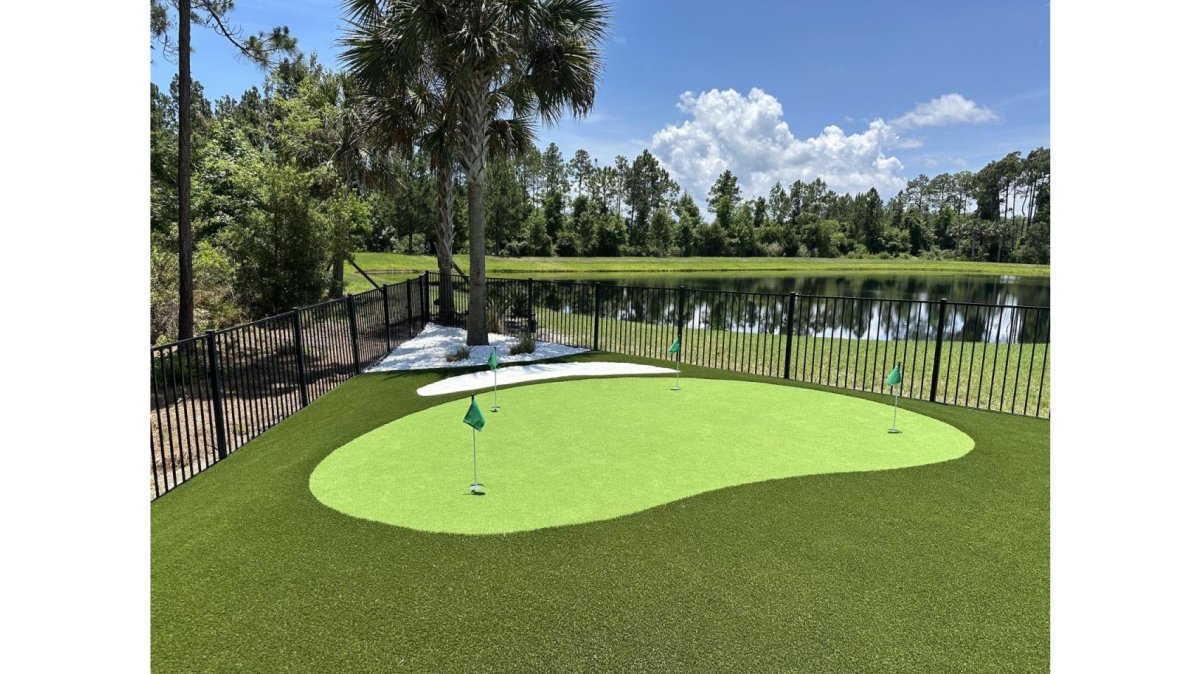
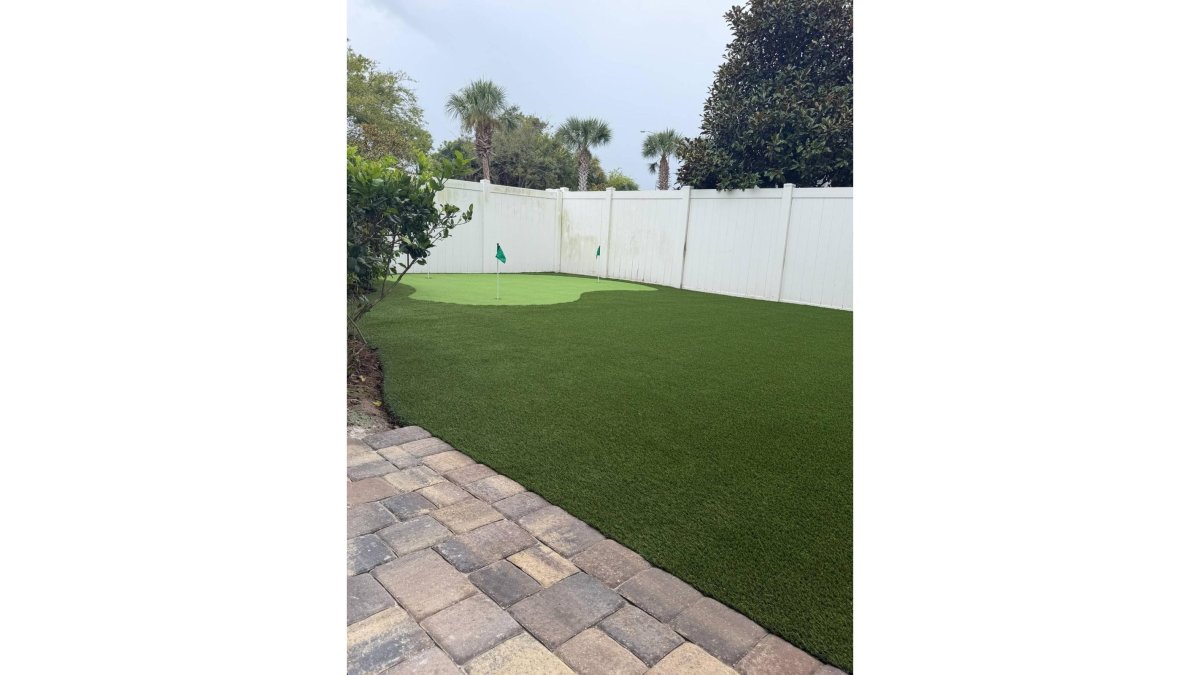
Beyond standard residential lawns, synthetic turf enables custom applications like putting greens and game courts. These specialized installations demand higher quality fiber and more precise installation than general lawn coverage.
Putting greens require shorter pile height (0.5 to 1 inch) and denser fiber to simulate real green playing conditions. The backing must be firmer to provide consistent ball roll.
Custom backyard applications, sports courts, dog parks, play areas, each have specific requirements. Sports courts need shock-absorbing base layers. Dog parks need antimicrobial infill and heavy face weight.
The advantage of working with a local installer for custom applications is design consultation. National chains sell standard products.
Frequently Asked Questions
What is the most realistic-looking artificial grass for a residential lawn?
The most realistic artificial grass combines polyethylene fibers with a multi-color blend, pile height between 1.5 to 2.5 inches, and a face weight of 50+ ounces per square yard. Look for turf with UV-resistant backing and infill that mimics natural soil color. Quality manufacturers offer grass that matches regional grass varieties, whether cool-season or warm-season types. Avoid single-color options, which appear plastic-like. Realistic turf should feel soft underfoot and move naturally in wind.
How durable is pet-friendly artificial turf compared to natural grass?
Pet-friendly artificial turf is engineered to resist urine damage, digging, and staining, issues that degrade natural grass quickly. Premium turf features antimicrobial backing to prevent odor and bacterial growth from pet waste. With proper drainage and occasional rinsing, artificial turf lasts 15-20 years under heavy pet use, while natural grass in high-traffic pet areas may need reseeding every 1-2 years. Artificial turf eliminates muddy paw prints and doesn't develop bare spots from digging.
What should I compare when choosing an XGrass alternative?
Compare fiber material (polyethylene vs. polypropylene), pile height (height affects durability and appearance), face weight (heavier = more durable), backing system (permeable vs. sealed), infill type, UV warranty, drainage capability, and installation method. Also evaluate whether the installer is local and accountable, offers transparent pricing, uses PFAS-free materials, and provides warranty coverage. Ask about performance in shade, pet wear, and foot traffic specific to your backyard conditions.
Is artificial turf installation cost worth it compared to maintaining natural grass?
Over 15-20 years, artificial turf often costs less than maintaining natural grass when you factor in mowing, watering, fertilizer, aeration, and reseeding. Natural grass in residential areas costs $500-$2,000+ annually in maintenance. Artificial turf has high upfront installation costs but requires only occasional rinsing and debris removal. Financing options make upfront costs manageable. Calculate your climate's watering costs and your time value; shade-heavy yards and pet-intensive properties see faster ROI with artificial turf.
Choosing an XGrass alternative for residential lawns requires evaluating fiber quality, durability specifications, and installation expertise. Bold Turf Co. combines premium PFAS-free synthetic turf materials with personalized project management and 0% financing options. We handle every installation from start to finish, ensuring your lawn performs reliably for 12-15 years. Get a free turf estimate from Bold Turf Co. and discover why local expertise delivers better results than national chains.