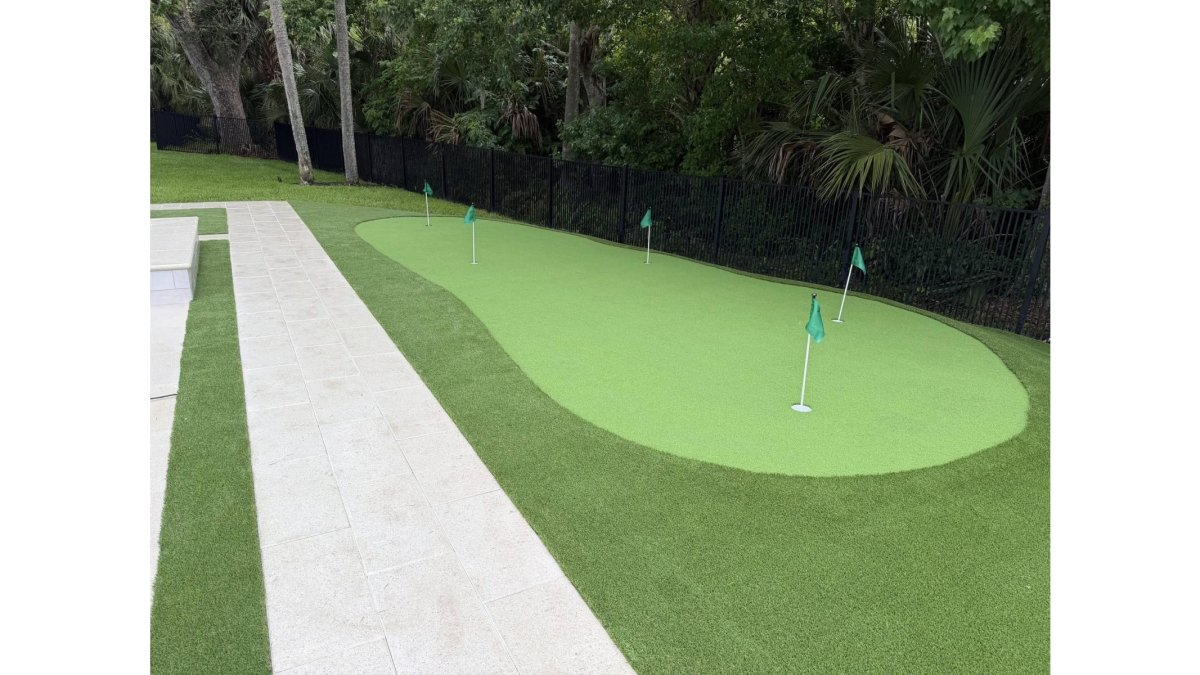
 Comparison
How to Pick Turf Infill for a Shaded Putting Green
Quick Summary
For a shaded putting green, choose a turf infill that handles moisture well, since shade keeps the surface damp longer. Coated sand or well-drained silica sand usually suit shaded greens best, while organic infills break down and hold water. Confirm the base drains properly, because no infill compensates for standing water.
- Shade keeps turf infill damp longer, so moisture handling matters more than appearance.
- Coated sand tolerates damp shade better than raw silica sand.
- Organic infills break down over time and can invite microbial growth in wet shade.
- Finer silica grades like 16/30 roll faster but hold moisture longer.
- Use the manufacturer's recommended infill depth, not a rule of thumb.
Table of Contents
- Why Shade Changes the Infill Decision
- Types of Artificial Turf Infill
- Best Infill for Artificial Turf in Shaded Putting Greens
- Silica Sand Infill for Artificial Turf: Ball Roll and Drainage Trade-Offs
- How Much Infill for Artificial Turf Putting Greens Needs
- Infill vs. Non-Infill Putting Green: Which Holds Up Better in Shade
- Scheduling Your Free Turf Estimate for a Shaded Backyard
- Frequently Asked Questions
Last Updated: November 8, 2026
Shade changes the turf infill decision more than most guides admit. For a companion article on what artificial grass handles in shaded backyards, read artificial grass for shady backyards. Artificial turf in a shaded backyard stays damp longer, dries slower, and gives moss and algae more reason to grow, so the turf infill you pick affects drainage, feel, and upkeep as much as ball roll. This guide walks through the main infill options and explains which ones suit a putting green that gets little direct sun.
Before comparing materials, it helps to be clear on what infill does. Infill is the granular material spread between turf fibers to hold them upright, add weight, and help the surface feel stable underfoot (Exposure Characterization for Athletes Playing on Synthetic Turf Fields with Tire Crumb...). On a putting green, it also shapes how fast and true the ball rolls.
Why Shade Changes the Infill Decision
In full sun, infill dries out quickly after rain or irrigation. Under heavy tree cover, the surface can stay wet for much longer. For shade-specific putting green installation guidance, see shady-yard putting green installation. That moisture is what drives the trade-offs that follow, so the right infill for a shaded green is usually the one that handles water and biological growth best, not the one that looks best on day one.
We recommend starting with three questions: How many hours of direct sun does the green get? How well does the site drain? Will pets or children use it heavily? The answers narrow the field quickly.
Types of Artificial Turf Infill
Most residential putting greens use one of four infill families. Under shade, the differences that matter most are how each material handles persistent moisture, how it compacts, how it affects ball roll, and how much maintenance it demands. The table below summarizes the trade-offs; the notes after it explain the mechanisms.
| Infill family | Drainage in shade | Moisture retention | Compaction / settling | Ball roll on a putting green | Heat | Odor / biological risk | Relative cost |
|---|---|---|---|---|---|---|---|
| Raw silica sand (12/20 or 16/30) | Moderate | High | Settles firmly; can crust | Fast, firm, consistent | Low | Moderate in damp shade | Low |
| Coated / antimicrobial sand | Moderate to good | Moderate | Settles firmly | Fast, firm, consistent | Low | Lower | Moderate |
| Organic (cork, coconut, rice-hull blends) | Good initially, slows as it breaks down | Moderate to high | Compacts and breaks down | Slower, less consistent | Low | Higher in wet shade | Moderate to high |
| Crumb rubber / polymer | Good | Low | Resilient, resists settling | Springy, less true for putting | Higher in sun | Low to moderate | Moderate |
| Zeolite blends | Moderate | Moderate | Settles firmly | Firm, consistent | Low | Marketed for odor control | Moderate to high |
Silica Sand and Coated Sand
Silica sand is a common infill for putting greens because it is heavy and available in fine grades. Its weakness in shade is that it holds water between particles, so a green under tree cover can stay damp long after a rain. Coated sand adds a polymer or antimicrobial surface layer that reduces odor and slows bacterial growth; it still retains some moisture but tolerates damp shade better than raw silica. A common pattern is to specify coated sand where airflow is poor and raw silica where the base drains freely and cost is the priority.
Organic, Cork, and Crumb Rubber Options
Organic infills such as cork, coconut, and rice-hull blends look natural and drain well when new, but they break down over time, and the fines that result can clog the drainage path and hold moisture. In shade, that breakdown is slower to dry out and can invite microbial growth, so organic infill needs closer inspection and more frequent top-ups. Crumb rubber cushions well and resists settling, but it feels springy under a putt and can run warmer in direct sun; it suits play areas more than a putting surface that needs a true roll. Zeolite is marketed for odor control and is worth asking about for a damp site, but confirm with the installer how it performs under sustained shade before committing.
Watch out: any infill that traps fines or breaks down will lose drainage first at the low spots, so check the base and slope before blaming the material.
Best Infill for Artificial Turf in Shaded Putting Greens
If the green sits in a low spot or stays wet for long periods, consider improving drainage first, because no infill fully compensates for standing water.
Silica Sand Infill for Artificial Turf: Ball Roll and Drainage Trade-Offs
Silica sand is the reference point for putting performance because it gives a firm, consistent surface, but the roll you get depends on three variables that generic guides rarely connect: particle size, application depth, and how evenly the sand is distributed across the green.
Particle size. Finer grades such as 16/30 pack tighter and produce a smoother, faster roll; coarser grades such as 12/20 leave more void space, which can feel slightly slower and more textured but drains a bit better. On a shaded green, the finer grade's tighter packing holds moisture longer, so the faster roll comes with a longer drying time.
Application depth. Too little sand leaves fibers leaning and the surface unstable, which shows up as inconsistent roll and footprints that don't recover. Too much sand buries the fiber tips, adds weight, and can slow the roll and stiffen the surface. Manufacturers publish a target infill depth for each product; that figure, not a rule of thumb, should drive the quantity.
Distribution. Sand applied in uneven passes creates fast and slow zones that a putt will reveal. A common pattern is to apply in two or three lighter passes with brushing between them, rather than one heavy pass, so the material works into the pile evenly.
How shade changes the trade-off. In full sun, a silica-filled green sheds surface moisture quickly and the fast roll returns within hours of rain. Under heavy tree cover, the same green can stay damp for a day or more, and damp sand packs differently: the surface may feel firmer in the morning and softer by afternoon as moisture redistributes. Most practitioners find that shaded silica greens need periodic light brushing and rinsing to keep the surface from crusting, and that the drainage base matters more than the sand grade once shade is in play. Learn how to keep the green in good condition after installation in how to maintain backyard putting greens. If the green sits in a low spot, fix the base and slope first, because no sand grade compensates for standing water.
How Much Infill for Artificial Turf Putting Greens Needs
Infill quantity depends on the product, the pile height, and the size of the green, so there is no single number that fits every project. Manufacturers publish recommended application rates, and those rates are the starting point. Your installer should measure the area, confirm the target infill depth, and calculate the total weight or volume needed.
Be cautious of any quote that skips this step. Too little infill leaves fibers flopping and the surface unstable. Too much adds weight and can slow the roll. Ask for the product's recommended rate in writing before you agree to a price.
Infill vs. Non-Infill Putting Green: Which Holds Up Better in Shade
Non-infill turf skips the granular layer entirely. It is easier to keep clean and dries faster in some cases, because nothing holds water between the fibers. The downside is that the fibers can lay over, the surface can feel springy, and putting consistency suffers, especially in heavy use.
For a shaded putting green, the choice comes down to priorities. If you want the most authentic roll and stable footing, an infill system with good drainage performs better. If you want the least upkeep and the greens see light use, a non-infill product can be worth considering. Either way, the underlying drainage and the turf's backing matter as much as the infill itself.
Scheduling Your Free Turf Estimate for a Shaded Backyard
Choosing infill for a shaded green is easier once someone has looked at the actual site. Drainage, tree cover, grade, and how the yard will be used all shape the right answer. Bold Turf Co. offers a free turf estimate, and our owners stay involved from the first visit through installation.
Pricing depends on quantity, dates, and delivery, so request a quote for current figures. To request an estimate, contact Bold Turf Co. to schedule a visit. Our team can also walk you through custom backyard putting green installation options and pricing for your yard.
Frequently Asked Questions
What is the best infill for an artificial turf putting green in shade?
For shaded putting greens, coated sand and silica sand are the most commonly recommended options because they support ball roll and resist compaction. Organic infills can hold moisture longer under tree cover, which raises the risk of odor and biological growth. Because shade slows drying, choose an infill that drains well and pair it with a regular brushing and rinsing routine. Pricing depends on quantity, site conditions, and delivery, so request a quote for current figures.
Does putting green turf need infill?
Infill is not always required, but most putting greens perform better with it. Infill stabilizes the blades, helps the turf stand upright, and supports consistent ball roll. Non-infill turf is simpler to install and can work on lightly used greens, but it tends to flatten and hold moisture when shaded. The right choice depends on how often the green is used, how much shade it gets, and how well the site drains. Bold Turf Co. can help you weigh those factors for your yard.
How much infill does artificial turf need?
Infill quantity depends on pile height, the turf product, and the infill type, so no single number applies to every green. Too little infill lets blades fall over and reduces ball speed control, while too much can add weight and slow drainage. Ask your installer for the depth that matches your turf, and confirm quantities during your free estimate with Bold Turf Co.
Can artificial turf infill cause problems in shaded areas?
Yes. Shade slows evaporation, so infill can stay damp for longer, which can encourage odor, mold, and algae if drainage is poor. Organic and rubber-based infills are more likely to retain moisture than sand. Good site preparation, proper base drainage, and periodic brushing and rinsing reduce these risks.